

speech organ
- noun
- /spiːtʃ ˈɔrɡən/
- Specialized
- The child practiced moving her speech organs to form clear words.
Examples
-
Linguists study how different speech organs like the lips and tongue create various sounds.
-
He learned to control his speech organs to improve his pronunciation in a new language.
-
Their speech organs are adequate.
-
According to Martins (2000), every time we express ourselves, we have to coordinate not merely muscular movements in the speech organs or in the hand grasping the pen.
Academic text (2009)
Synonyms


 1
4.4
1
4.4
A body part like the tongue or lips used to make sounds for talking
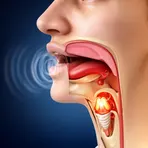
A part of the mouth or throat that helps make speech sounds

A part in the mouth like the tongue or lips that helps make speech sounds
Surface Forms
Morphology
The meaning 'an organ involved in producing speech sounds' is transparently derived from combining 'speech' (the act of producing spoken language) with 'organ' (a bodily part with a function). This is a straightforward noun–noun composition found across languages, so a B1 learner who knows both words would readily infer the MWE's meaning.
Etymology
The phrase speech organ is the name for the body parts that make our words. For example, the tongue, lips, and vocal cords work together to shape sounds. Because these parts help you 'speak', speech organ now means any body part used to make speech sounds.