

articulator
- noun
- /ɑrˈtɪkjʊˌleɪtər/
- Specialized
- The tongue and lips are important articulators that help form clear speech sounds.
Examples
-
In the word street, the choice of the articulatory strategy might be determined by competing demands on the articulators due to production context (coarticulation).
Academic text (2011) -
If large mirrors are available in a classroom or rehearsal space, singers will benefit significantly from observing posture and use of the articulators (lips, teeth, tongue, and jaw).
Academic text (2006) -
It's so that your articulators are not having to move as fast or as far, but it might also make perception in some ways easier in a case like this.
-
Students can also observe their fellow singers, paying close attention to the shape of the articulators associated with particular vowels and pitches.
Academic text (2006) -
A critical player in speech is the brain, and one of the main reasons the articulators move the way they do is that this is what happens when you couple the neural dynamics of language to an articulation system.
Blog text (16) -
In phonetics, the mouth's articulators include the tongue, lips, and soft palate.
-
To improve their pronunciation, students practiced using their articulators in various exercises.
Synonyms


 1
4.4
1
4.4
A body part like the tongue or lips used to make sounds for talking

A body part like the tongue or lips that makes speech sounds
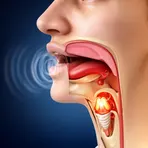
A part of the mouth or throat that helps make speech sounds

The tongue used to speak
Surface Forms
Morphology
articulator = articulate (semi-transparent) = articulate + or
Formally derived from 'articulate' + '-or', but the sense 'movable organ for producing speech sounds' is a specialized anatomical/phonetic usage that may not be obvious to general learners.
Etymology
Articulator comes from the Latin articulus, which means 'joint', so in speech an articulator is a moving part like the tongue or lips that shapes sounds. That's why damage to an articulator can change how clearly someone speaks.