
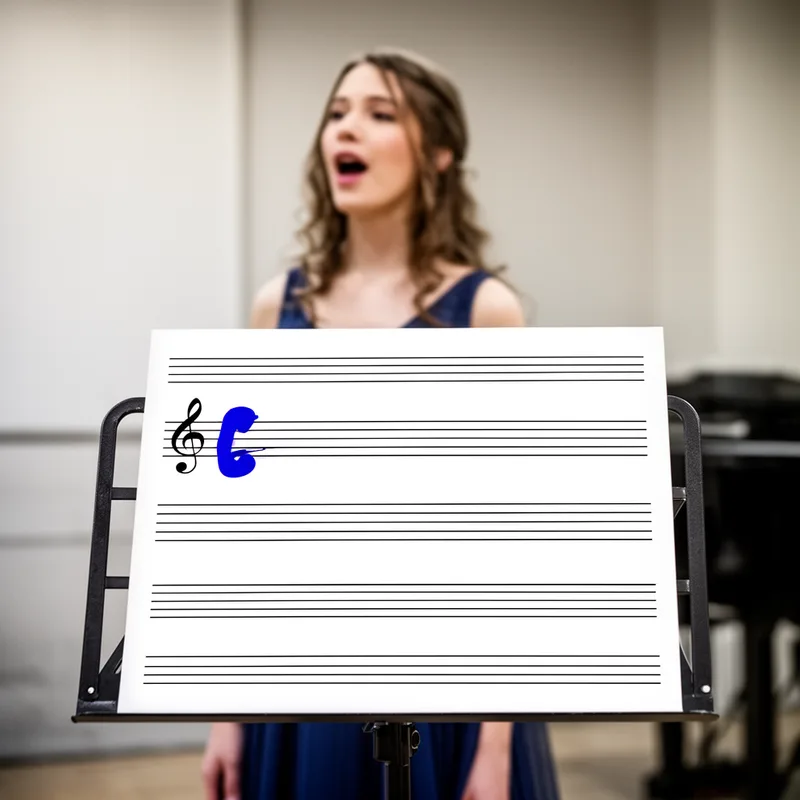
soprano clef
- noun
- /səˈprænə klɛf/
- Archaic
- You can identify the soprano clef because it places middle C on the lowest staff line.
Examples
-
The old choral score was written using the soprano clef, which is unfamiliar to most modern singers.
-
Music students rarely encounter the soprano clef outside of specialized historical pieces.
-
The soprano clef is essential for singing high notes.
-
Many vocalists prefer using the soprano clef for their music.
-
The soprano clef is often used in choral music to notate parts for female voices.
-
In rare cases, composers might implement the soprano clef to indicate higher vocal ranges.
-
Students learn the soprano clef to help them read music written for soprano singers.
Antonyms

- Specialized


 1
5.6
1
5.6
A sign on written music that marks the note F below middle C for low instruments and voices
How High
- Archaic

- Specialized
1
6.0
- Specialized
- Specialized
- Specialized
1
5.6
Surface Forms
Morphology
The phrase is a straightforward composition: 'soprano' (the high singing voice) + 'clef' (a symbol that shows pitch), so a learner who knows both words can infer it is the clef used for soprano vocal parts. The more technical note about middle C placement is specialist musical detail but does not prevent a B1 learner from understanding the basic meaning.
Etymology
The musical term soprano clef comes from the way this clef places the note 'middle C' on the bottom line of the staff. That clear picture made it easy to write music for soprano voices, so the sign became the name for the clef used for high vocal parts.