
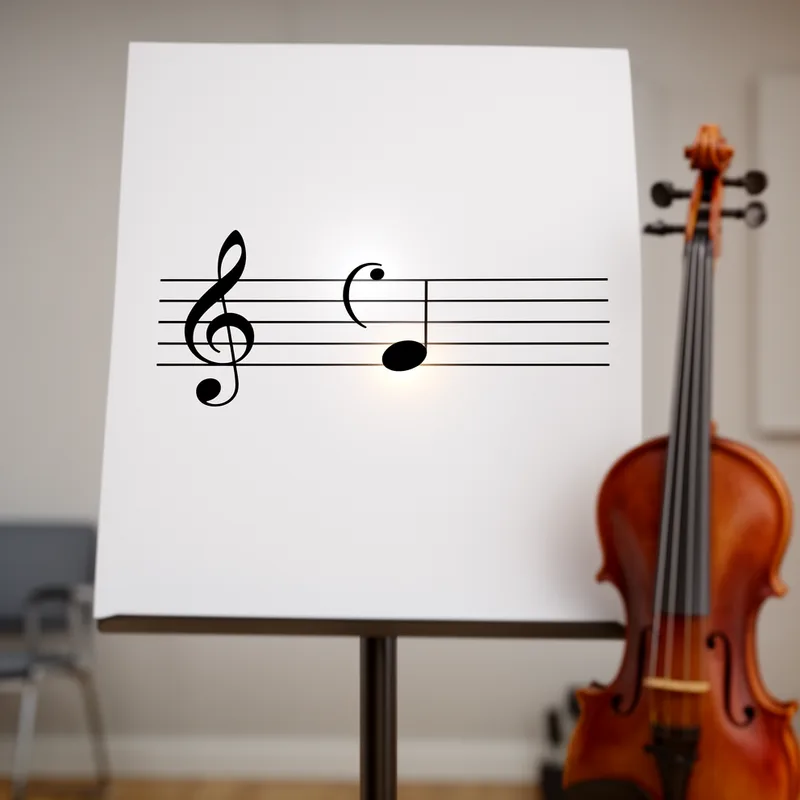
alto clef
- noun
- /ˈæltoʊ klɛf/
- Specialized
- The alto clef shows middle C on the third line of the staff for violists.
- reading the alto clef
Examples
-
I am not too good at reading the alto clef, though.
Academic text (2007) -
Violinists can read from the alto clef part.
Academic text (2000) -
Clarinetists and trumpeters can also read the C part (second violin preferably) up a whole step and add two sharps, which is like reading the alto clef.
Academic text (2000) -
Viola players often use the alto clef when reading their music.
-
To practice, she spent hours learning notes written in the alto clef.
Synonyms
A sign on the five music lines that shows middle C on the third line, used for viola music
How High
- Archaic

- Specialized


 1
6.0
1
6.0
- Specialized
- Specialized
- Specialized
1
5.6
Surface Forms
Morphology
The compound transparently indicates a clef associated with the alto register because 'alto' (a lower voice/pitch range) modifies 'clef' (a pitch-sign), so a B1 learner who knows both words will infer it is the clef used for alto-range pitches. However, the exact technical specification (middle C on the third line and its routine use for viola) is specialized musical knowledge not predictable from the constituents, making it only partially transparent.
Etymology
Alto clef comes from old music practice where clefs were named for the singing part they fit. The clef shows where 'middle C' sits on the staff, and the alto position puts it on the third (middle) line, so it suits instruments with a middle range like the 'viola' and is used for viola music.