
sonata form
- noun
- /səˈnɑːtə fɔrm/
- Specialized
- Haydn (1732-1809) broke new ground in many ways in the sonata form (which is what a symphony is), and, of course, he was one of the innovators of the entire Classical Period because he provided so many models of this genre.
Examples
-
Similarly, the scheme of sonata form or aria da capo is a scheme, not the product of a law of nature.
Academic text (1996) -
They've handed us Sonata Form, theme, second theme, development, recapitulation, and conclusion.
Fiction book (1997) -
A process as satisfying as sonata form at its best.
Fiction book (1997) -
In the 1964 program "What Is Sonata Form?"
Academic text (2004) -
In three days, he developed the melody into sonata form, scoring it for piano and violin.
Fiction book (1996) -
Sonata Form: themes, development, recapitulation, conclusion.
Fiction book (1997) -
In many classical pieces, sonata form, theme and variations, minuet and trio, and rondo forms are common.
Academic text (2015) -
Indeed, many of the titles of the Young People's Concerts are in the form of a question ("What Makes Music Symphonic?", "What Is Sonata Form?", and "What Is Classical Music?").
Academic text (2004) -
Considering this series to be "among my favorite, most highly prized activities of my life," Bernstein taught millions of television viewers all over the world about such diverse topics as impressionism, sonata form, orchestration, and folk music.
Academic text (2004) -
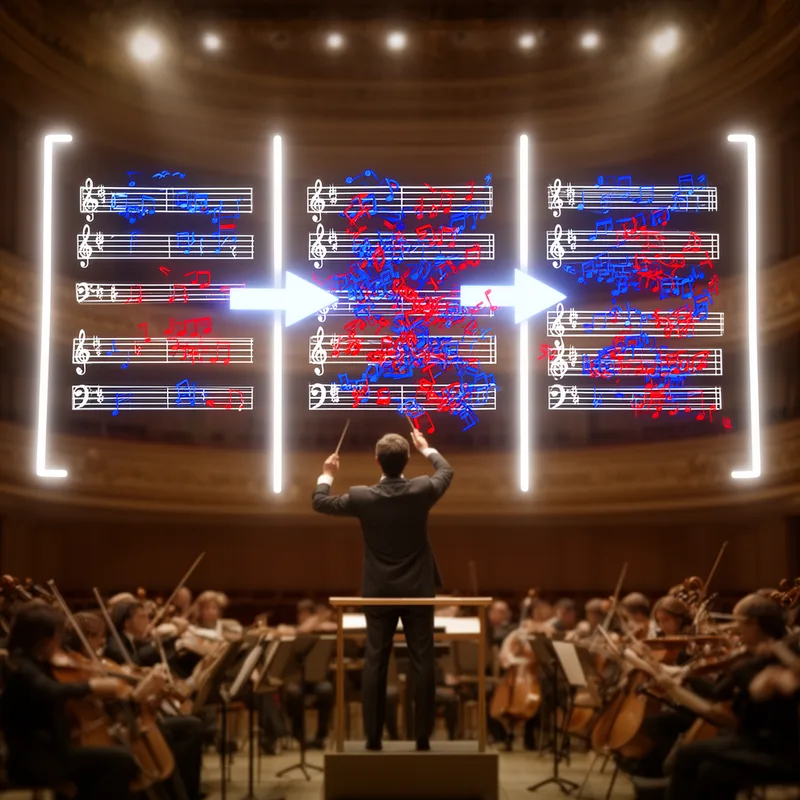
Many classical symphonies are structured using sonata form, which includes exposition, development, and recapitulation.
How Complex

Surface Forms
Morphology
The compound is compositionally built: a learner who knows 'sonata' (a type of musical work) and 'form' (a structure or type) can infer this refers to the structural plan of a sonata. Although the precise technical sections (exposition, development, recapitulation) are specialized music-theory details, the general meaning 'the form/structure used in a sonata' is directly derivable from the constituents.
Etymology
Sonata form treats a piece of music like a short story in three parts. The first part ('exposition') introduces the main tunes, the middle ('development') plays with and changes them, and the last ('recapitulation') brings them back. That's why sonata and form together mean the shape composers use to organise many first movements.

