

somatic chromosome
- noun
- /səˈmætɪk ˈkɹoʊməsom/
- Specialized
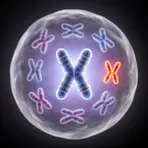
- Humans have 22 pairs of somatic chromosomes and one pair of sex chromosomes.
Examples
-
Humans have 22 pairs of somatic chromosomes.
-
A somatic chromosome carries genetic information.
-
During fertilization, each gamete contributes a single set of somatic chromosomes to the offspring.
-
Genetic mutations in a somatic chromosome can lead to various inherited disorders.
-
Humans have 22 pairs of somatic chromosomes in their body cells.
-
Genetic information is found on each somatic chromosome in the human genome.
-
During cell division, somatic chromosomes replicate and ensure genetic continuity.
Synonyms


 1
7.4
1
7.4
A chromosome that is not a sex chromosome, found in pairs in body cells
Surface Forms
Morphology
The compound meaning is directly built from 'somatic' (body-related) + 'chromosome' (DNA structure), so a learner who knows both words can infer it refers to chromosomes in body cells (i.e. non-sex chromosomes). The composition follows regular biomedical naming patterns and has clear parallels in other languages, making the MWE immediately understandable to learners who know the constituents.
Etymology
Somatic chromosome comes from somatic meaning 'body' and chromosome meaning a thread of genes, so imagine pairs of these threads living in every body cell. That's why somatic chromosome refers to the chromosomes found in ordinary 'body' cells, not the ones in 'sex' cells.