
sodium carboxymethyl cellulose
- noun
- /ˈsoʊdiəm ˌkɑrbəˌkɪməθəl ˈsɛlɪˌkəʊs/
- Specialized
- Many manufacturers add sodium carboxymethyl cellulose to ice cream to improve texture.
Examples
-
The pharmaceutical company uses sodium carboxymethyl cellulose as a tablet binder in its products.
-
Many gluten-free recipes include sodium carboxymethyl cellulose to replicate gluten's binding effect.
-
The sodium carboxymethyl cellulose is white.
-
Don't forget to check for sodium carboxymethyl cellulose in your food!
-
Many manufacturers add sodium carboxymethyl cellulose to ice cream to improve texture.
-
Many gluten-free recipes include sodium carboxymethyl cellulose to replicate gluten's binding effect.
-
The pharmaceutical company uses sodium carboxymethyl cellulose as a tablet binder in its products.
Synonyms

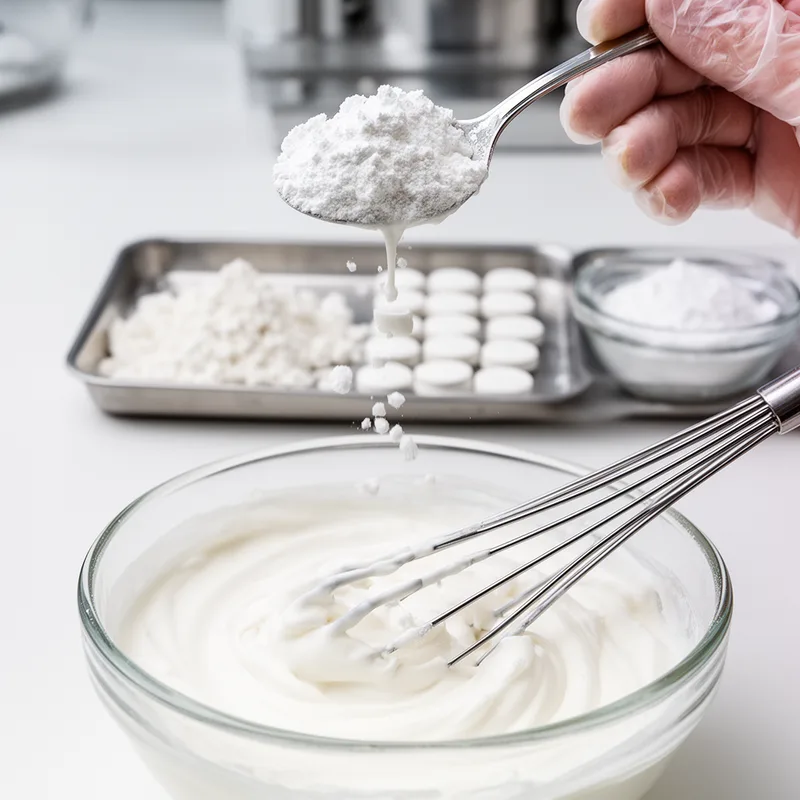
A white powder that dissolves in water to make food and other products thicker and more stable
Surface Forms
Morphology
sodium + carboxymethyl + cellulose
The phrase transparently signals a chemical composition: 'sodium' (the sodium salt) + 'carboxymethyl' (a chemical modification combining carboxy- and methyl) + 'cellulose' (a plant polymer), so a learner could infer it is a sodium salt of modified cellulose. However, 'carboxymethyl' is a specialized morphological/chemical term and the exact nature and typical use (a gummy thickening/emulsifying powder) are technical, so the meaning is not fully predictable for a B1 learner.
Etymology
Sodium carboxymethyl cellulose is named for what it is: plant fiber (cellulose) with small carboxymethyl pieces added and then turned into a sodium salt so it soaks up water and becomes a white, gummy powder. That's why sodium carboxymethyl cellulose is used as a 'thickener' and 'binder' in foods and medicines.

