
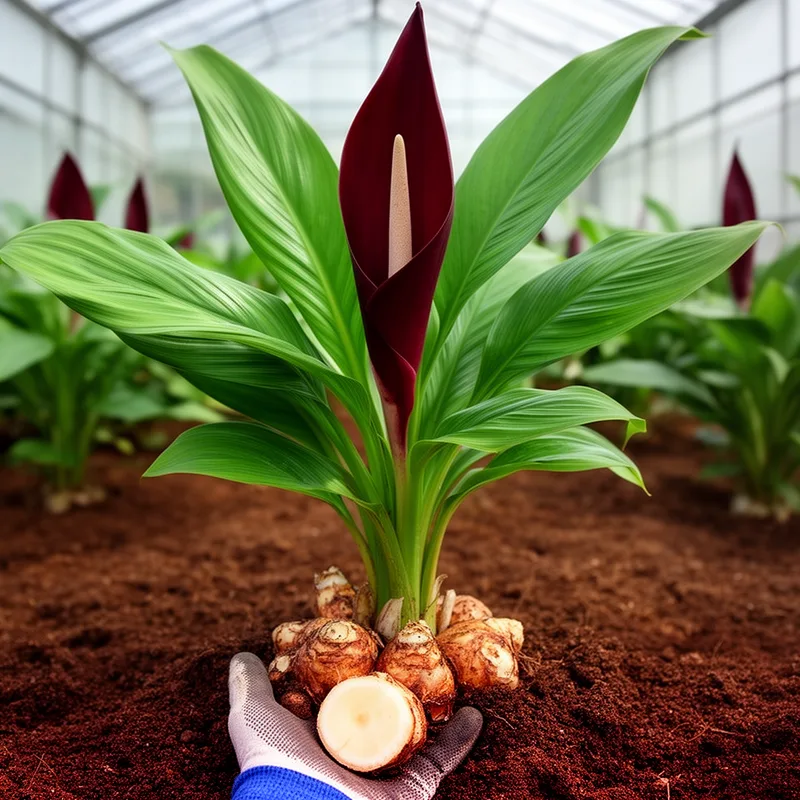
snake palm
- noun
 :
palma serpiente
:
palma serpiente
- Some farmers in Asia cultivate the snake palm for its starchy, edible corms.
Examples
-
The dark red spathe of the snake palm stands out among tropical plants.
-
The snake palm is often grown in greenhouses for its striking foliage.
-
The snake palm is known for its unique appearance.
-
Many gardeners love the snake palm for its striking leaves.
-
Some farmers in Asia cultivate the snake palm for its starchy, edible corms.
-
The snake palm is often grown in greenhouses for its striking foliage.
-
The dark red spathe of the snake palm stands out among tropical plants.
Synonyms
A tropical plant with large leaves, a dark red flower-like part, and edible underground stems
A tropical plant from Southeast Asia with large leaves, a dark red flower part, and edible underground stems
A tropical plant with a strong smell, a large dark red flower and edible underground bulbs
Surface Forms
Morphology
The noun composition 'snake palm' transparently signals a type of palm associated with 'snake' (e.g., appearance or relation), so a B1 learner who knows both words can infer it refers to a palm species with snake-like features or connection. However, the detailed senses—foul smell, fleshy edible corms, and specific ornamental structure—are not derivable from the constituents, so the meaning is only partially predictable.
Etymology
Snake palm may come from the plant's strange look. Its dark, curved flower or long root can look like a snake next to the big palm-like leaves. So the snake image and the plant's strong smell and edible corms made people call this tropical 'plant' a snake palm.

