
sinification


 1
9.9
- noun
- /ˌsɪnɪfɪˈkeɪʃən/
- Specialized
- The sinification of local customs can be seen in many Asian countries.
Examples
-
The sinification of local customs was evident after years of Chinese rule.
-
Many scholars debate the extent of sinification in ancient Korean society.
-
Linguists have documented the sinification of vocabulary in several Southeast Asian languages.
-
Many historians study the sinification of Japan during the Tang dynasty.
-
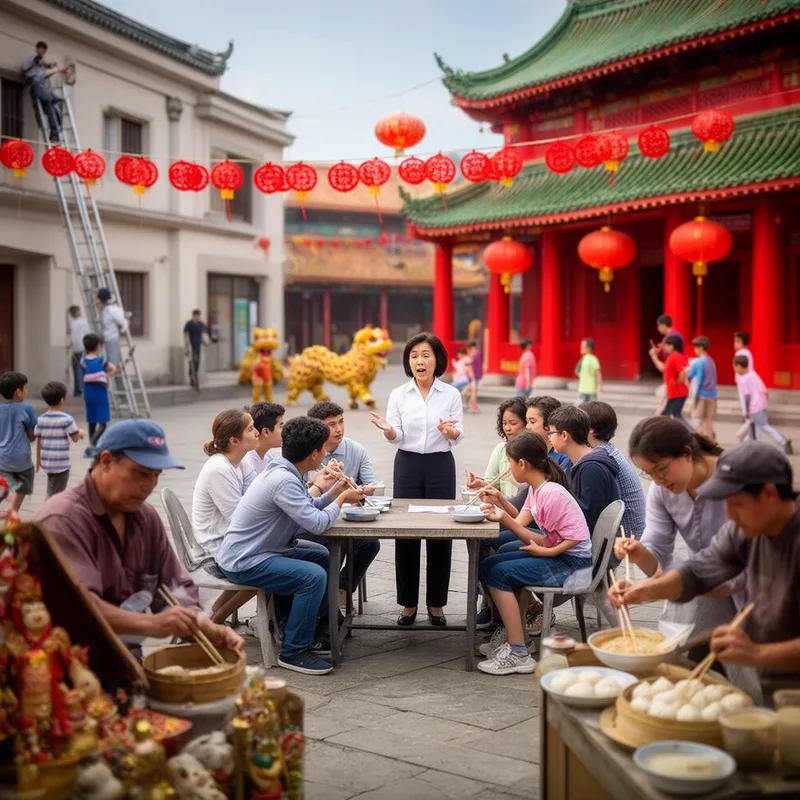
The sinification of local customs is evident in the traditional festivals celebrated in the city.
-
Many restaurants in the area showcase the sinification of their menus by including popular Chinese dishes.
-
The school’s curriculum underwent sinification, incorporating Mandarin language classes and Chinese history lessons.
Synonyms
 1
9.9
A process in which people, groups, or customs become more Chinese in culture, language and politics
Antonyms

Surface Forms
Morphology
sinification = sinify (semi-transparent) = sin + ify + ation
Adding '-ation' to 'sinify' creates a regular process noun, so the derivational step is clear.
Etymology
Sinification starts with Sino- meaning 'Chinese' and ends with -fication meaning 'making', as in simplification. So, sinification is the process of 'making' people, places, or customs more Chinese, which is why it means the spread or adoption of Chinese culture, language, or institutions.