

single-stranded
 1
5.5

- adjective
- /ˈsɪŋɡəl ˈstrændɪd/
- Specialized
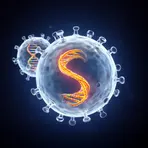
- Human parechovirus (HPeV) is a positive-sense, single-stranded RNA virus belonging to the family Picornaviridae and the genus Parechovirus (1, 2).
- single-stranded RNA
- single-stranded DNA
- single-stranded RNA virus
Examples
-
And that allows you to build a polymer of single stranded DNA, right?
-
Hepatitis C (Flaviviridae hepacivirus) is a small, enveloped, single-stranded RNA virus.
Blog text (18) -
But it travels around as a single stranded piece of DNA.
-
And it can be single stranded or double stranded.
-
And those genes then produce RNA, which is a single stranded version of DNA.
-
Single-stranded fragments containing both A and B are kept in further steps.
Academic text (2008) -
RNA has a similar structure to DNA, but is often single-stranded, shorter, and less stable than DNA.
Blog text (18) -
Different from viruses, the viroid lacks a protein envelope and the genome is a closed, single-stranded RNA molecule.
Academic text (2017) -
For example, graphene binds to single-stranded DNA effectively but not to double-stranded DNA and can protect oligonucleotides from enzymatic cleavage.
Academic text (2018) -
During the experiment, we isolated a single-stranded RNA molecule that plays a crucial role in protein synthesis.
Synonyms

 1
7.8
Having only one long thin piece of material that carries genes, like RNA, not two

Having only one thin wire in electrical devices
How Interwoven

Surface Forms
Morphology
Etymology
Single-stranded breaks into single meaning 'one' and strand meaning 'thread', like a 'strand of hair'. So a single-stranded molecule is like one thread of genetic material instead of two threads twisted together, which helps explain why it is more flexible and more reactive.