

single-stranded


 1
5.5
1
5.5
- adjective
- /ˈsɪŋɡəl ˈstrændɪd/
- Specialized
- Human parechovirus (HPeV) is a positive-sense, single-stranded RNA virus belonging to the family Picornaviridae and the genus Parechovirus (1, 2).
- single-stranded RNA
- single-stranded DNA
- single-stranded RNA virus
Examples
-
And that allows you to build a polymer of single stranded DNA, right?
-
Hepatitis C (Flaviviridae hepacivirus) is a small, enveloped, single-stranded RNA virus.
Blog text (18) -
But it travels around as a single stranded piece of DNA.
-
And it can be single stranded or double stranded.
-
And those genes then produce RNA, which is a single stranded version of DNA.
-
Single-stranded fragments containing both A and B are kept in further steps.
Academic text (2008) -
RNA has a similar structure to DNA, but is often single-stranded, shorter, and less stable than DNA.
Blog text (18) -
Different from viruses, the viroid lacks a protein envelope and the genome is a closed, single-stranded RNA molecule.
Academic text (2017) -
For example, graphene binds to single-stranded DNA effectively but not to double-stranded DNA and can protect oligonucleotides from enzymatic cleavage.
Academic text (2018) -
During the experiment, we isolated a single-stranded RNA molecule that plays a crucial role in protein synthesis.
Synonyms
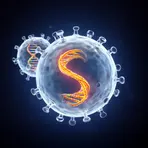
Having only one long thin piece of material that carries genes, like RNA, not two

Having only one thin wire in electrical devices
How Interwoven

Surface Forms
Morphology
Etymology
Single-stranded breaks into single meaning 'one' and strand meaning 'thread', like a 'strand of hair'. So a single-stranded molecule is like one thread of genetic material instead of two threads twisted together, which helps explain why it is more flexible and more reactive.