
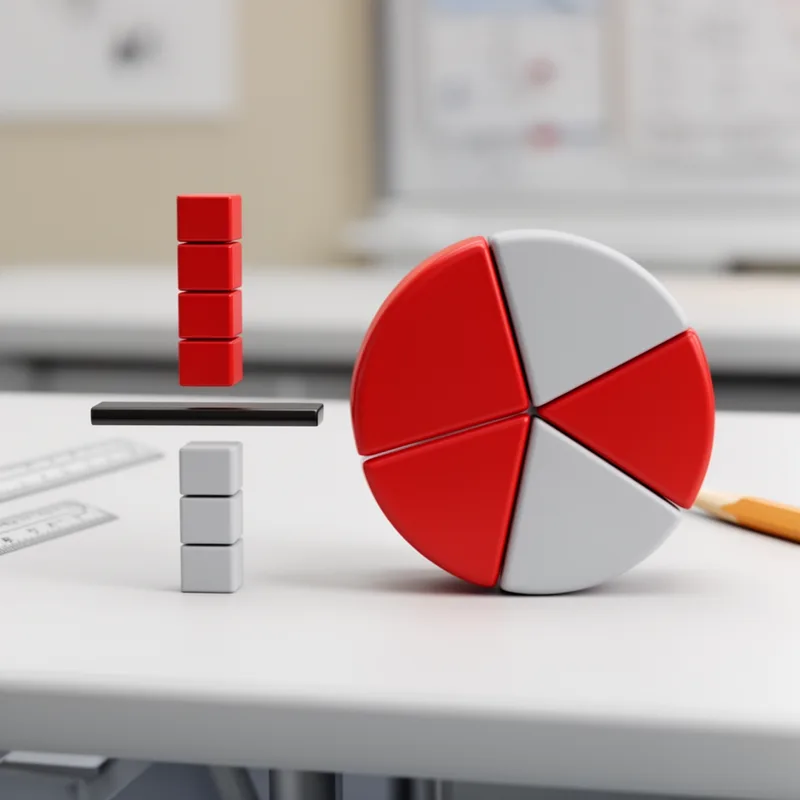
simple fraction


 1
3.4
1
3.4
- noun
- /ˈsɪmpəl ˈfrækʃən/
- Specialized
Examples
-
Elias's mathematical knowledge upon entering the program was at about the level of adding and subtracting simple fractions.
Academic text (2011) -
A simple fraction consists of a numerator and a denominator, both of which are whole numbers.
-
In math class, we learned how to add and subtract simple fractions like one-half and three-quarters.
-
Understanding simple fractions is essential for solving problems involving proportions.
Synonyms

A number written with two whole numbers separated by a line to show part of a whole, like 3/4
Antonyms

Surface Forms
Morphology
The term is compositionally transparent: 'simple' (basic/not complex) modifies 'fraction' (a number with numerator and denominator), so a learner will infer it denotes the ordinary/basic type of fraction—i.e. one built from whole-number numerator and denominator. There is no idiomatic or metaphorical shift and many languages use an equivalent construction, so a B1 learner who knows the parts will understand it.
Etymology
The term simple fraction comes from the idea of a fraction made from two plain 'whole numbers', with a numerator on top and a denominator below. It is called 'simple' because neither part is itself a fraction, so today simple fraction means a fraction whose top and bottom are whole numbers.