
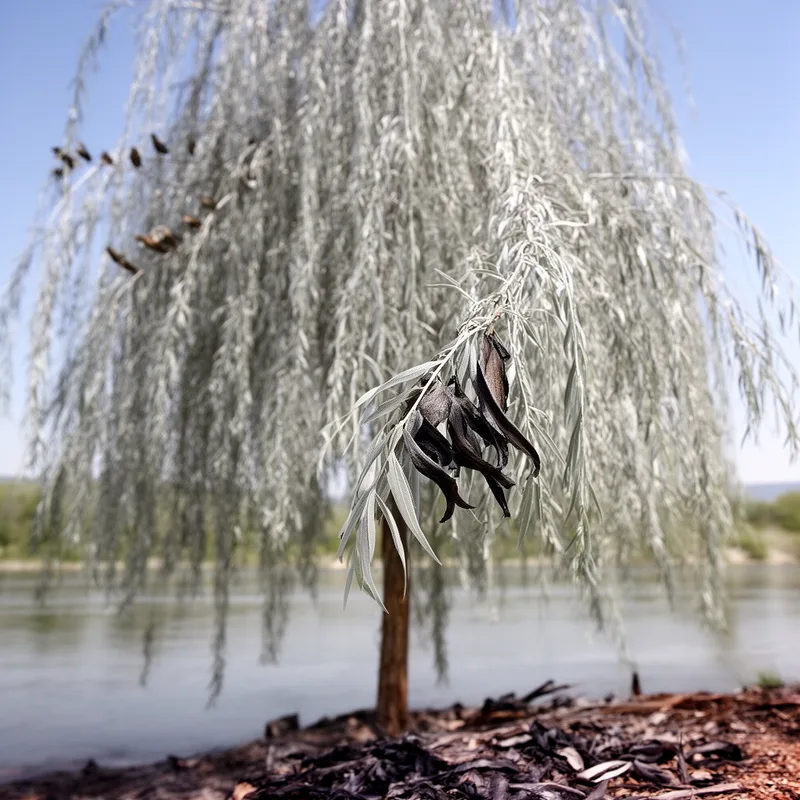
silver willow
- noun
- /ˈsɪlvər ˈwɪloʊ/
- US
- When pressed for herbaria, the silver willow often develops darkened, distinctive leaves.
Examples
-
The leaves of the silver willow shimmered in the afternoon sun.
-
Many gardeners prefer the silver willow for its elegant foliage.
-
A flock of birds landed on the branches of the old silver willow by the river.
-
The silver willow is known for its striking appearance.
-
The leaves of the silver willow shimmered in the afternoon sun.
-
A flock of birds landed on the branches of the old silver willow by the river.
-
Many gardeners prefer the silver willow for its elegant foliage.
Synonyms

A North American willow with silky grey leaves that turn black when dried

A North American white willow with pale silky leaves that turn black when dry

A North American willow tree with soft shiny leaves that grows near water
Surface Forms
Morphology
The meaning ('a willow tree with greyish, silky, downy leaves') is directly derivable from combining 'silver' (a pale gray hue) with 'willow' (a Salix tree). Color + noun compounding is a common and productive pattern cross-linguistically, so a B1 learner who knows both constituents would readily infer the MWE's meaning.
Etymology
Silver willow gets its name from the tree's pale, silky leaves that seem to shine like silver in the sun. The word silver points to the leaf color and willow is the tree, so the name means 'a willow with silvery leaves'.

