

Salix alba sericea
- noun
- Specialized
- The leaves of Salix alba sericea have a distinctive silky texture and pale color.
Examples
-
The dried leaves of Salix alba sericea usually turn black, which helps in identifying the species.
-
The Salix alba sericea thrives near water bodies.
-
Many parks in North America include Salix alba sericea for its ornamental value.
-
I saw a Salix alba sericea tree at the park.
-
In many North American gardens, Salix alba sericea is chosen for its attractive greyish silky leaves.
-
The Salix alba sericea can easily be recognized by its silky foliage that turns black when dried.
-
You can often find Salix alba sericea growing in wet areas due to its preference for moist soil.
Synonyms
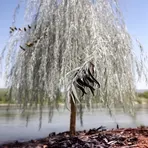
A North American tree with soft grey leaves that turn dark when dry

A North American willow with silky grey leaves that turn black when dried

A North American willow tree with soft shiny leaves that grows near water
Surface Forms
Morphology
Salix + alba + sericea
This is a botanical Latin name whose elements are descriptive: Salix = willow, alba = white, sericea ≈ silky, so the phrase literally denotes a 'white, silky willow' (a willow with silky leaves) and the meaning is directly derivable from the parts. Botanical Latin is a conventional, cross-linguistic descriptive system, so a learner who knows the constituent words would readily infer the MWE's meaning, although many B1 learners may in practice not know the Latin adjectives.
Etymology
Salix alba sericea gets its name from Latin: Salix means 'willow', alba means 'white', and sericea means 'silky'. So the name gives a clear image of a pale, silky-leaved willow and helps you remember this North American variety whose leaves look soft and later turn dark when they dry.

