

silk oak
- noun
- /sɪlk oʊk/
- Australian
- The cabinet was made from the richly colored wood of silk oak.
Examples
-
Silk oak trees are commonly planted as ornamentals in warm climates.
-
The silk oak tree grows tall and strong.
-
The distinctive fernlike leaves of the silk oak set it apart from other Australian trees.
-
Many people admire the beauty of silk oaks in Australia.
-
The carpenter chose silk oak for the new kitchen cabinets because of its unique grain and durability.
-
She admired the silk oak trees lining the avenue, their leaves swaying gently in the breeze.
-
The furniture made from silk oak is known for its beautiful finish and resistance to warping.
Synonyms

A tall fast-growing tree with bright orange flowers and feathery leaves
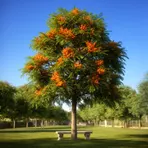
A tall Australian tree with feathery leaves and bright orange flowers
Surface Forms
Morphology
The noun–noun compound is compositionally regular: 'silk' modifies 'oak', signaling a kind of oak/tree with silk‑like (silky) qualities, so a learner who knows both words can infer it refers to a tree (often valued for its wood or appearance). This follows common descriptive compounding patterns cross‑linguistically, so although botanical specifics (it is actually Grevillea, not a true oak) may be unknown, the basic meaning is derivable from the parts.
Etymology
Silk oak may come from the tree's soft, silky flowers and leaves, the silk part, and from its hard wood that reminded early settlers of oak. So the name helps you picture a tree with silky leaves and oak-like wood.

