
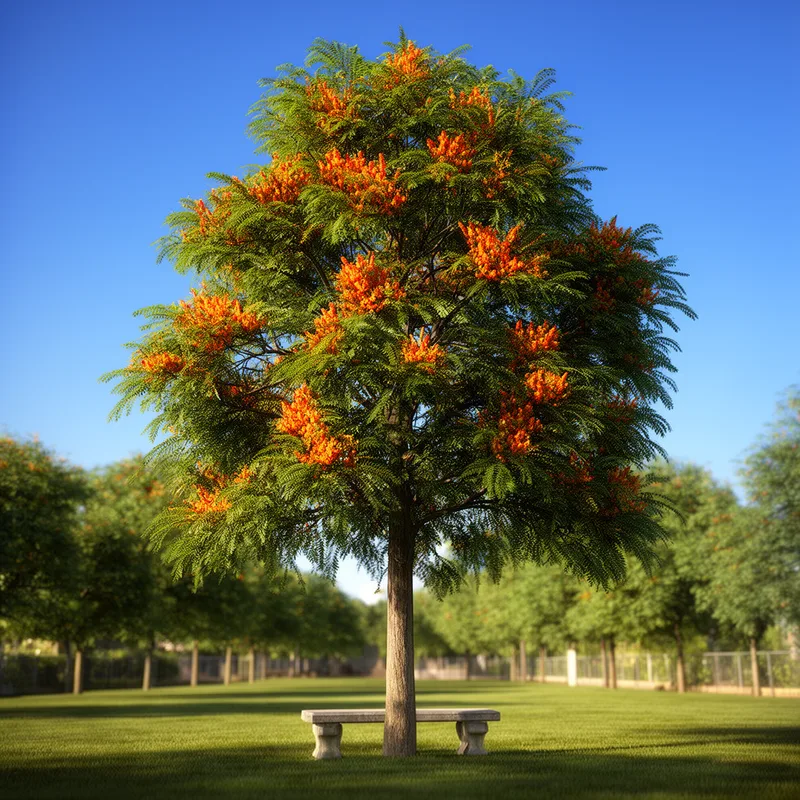
silky oak
- noun
- Australian
- The silky oak is native to eastern Australia.
Examples
-
The avenue was lined with magnificent silky oaks that bloomed in the spring.
-
A mature silky oak can provide excellent shade in large gardens.
-
The timber from silky oak is valued for its attractive grain and durability.
-
Many gardeners love the silky oak for its beauty.
-
The tall silky oak tree provides shade in the warm Australian climate.
-
In the botanical garden, the vibrant orange flowers of the silky oak attract many visitors.
-
The construction company chose silky oak timber for its durability and beautiful grain.
Synonyms

A tall fast-growing tree with bright orange flowers and feathery leaves

A tall Australian tree with leaves like a fern and wood used for furniture
Surface Forms
Morphology
silky + oak
This is a straightforward adjective + noun compound: a learner who knows 'silky' (smooth, soft) and 'oak' (a type of tree) will readily infer it refers to a kind of tree with silky qualities. Although 'silky oak' is a specific species name (not a true Quercus oak), the meaning is compositionally predictable from its constituents and follows common plant-naming patterns, so it is understandable to a B1 learner.
Etymology
Silky oak gets its name from an Australian tree that has soft, silky hairs under its feathery leaves and a strong wood that reminded people of true oak. So the word silky points to the soft leaf underside and oak to the oak-like wood, and today silky oak simply names that tree and its wood.

