

silicon oxide
- noun
- /ˈsɪlɪkən ˈaɪkaɪd/
- Specialized
- The main component of glass is silicon oxide.
Examples
-
Laboratory glassware is often made from fused silicon oxide due to its high melting point.
-
The majority of beach sand is composed of silicon oxide in the form of quartz grains.
-
Engineers studied how impurities in silicon oxide could affect the performance of electronic devices.
-
Many rocks contain silicon oxides in their composition.
-
Silicon oxide is commonly found in sand and is a major component of silicon oxide glass.
-
Researchers use silicon oxide in semiconductors due to its insulating properties.
-
The geologist explained that silicon oxide occurs in various mineral forms like quartz.
Synonyms
 12
7.3
12
7.3

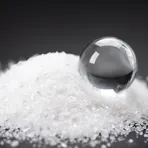
A hard white mineral like quartz found in sand and rocks used to make glass and ceramics
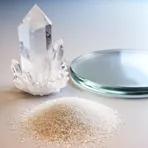
A hard white or clear material found in sand and quartz
Surface Forms
Morphology
This is a straightforward compositional chemical name: 'silicon oxide' literally denotes an oxide (a compound with oxygen) of silicon, so a learner who knows 'silicon' and 'oxide' can infer it is a compound of silicon and oxygen (SiO₂). The noun–noun formation is regular and mirrors equivalent constructions in other languages, making the meaning immediately derivable for B1 learners.
Etymology
Silicon oxide simply names the material: silicon (the common element in sand and rocks) joined with oxide (oxygen attached to it), making the hard, glass-like substance you find as 'quartz' or in 'glass', so the name points to the solid material we use for glass and many rocks.