

side-wheeler
- noun
- /ˈsaɪdˌwiːlər/
- Archaic
- Tourists marveled at the restored side-wheeler during the annual steamboat festival.
Examples
-
In the 1800s, a side-wheeler was a common sight on the Mississippi River.
-
The old side-wheeler navigated the river with ease, her paddles churning the water on both sides.
-
The side-wheeler glided smoothly across the river.
-
Many side-wheelers were used for transporting goods in the past.
-
The side-wheeler smoothly navigated through the bay, its paddles churning the water as it transported passengers to local islands.
-
In the 19th century, the side-wheeler was a popular choice for river travel, providing essential transportation along the Mississippi.
-
He admired the craftsmanship of the side-wheeler's wooden hull while it docked at the old marina, surrounded by smaller boats.
Synonyms
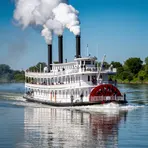
 16
3.9
16
3.9

A ship that uses steam engines to carry people or goods
 15
5.6
15
5.6
A boat powered by steam that worked on rivers in the 1800s
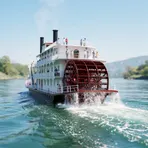 1
7.7
1
7.7
A steam boat with big wheels on the sides that push it through rivers or lakes


 1
6.6
1
6.6
A boat that uses a steam engine and large paddle wheels to move
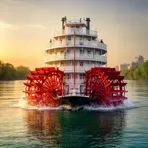 1
3.2
1
3.2
A large river boat with big wheels that push water to move
Surface Forms
Morphology
Etymology
Side-wheeler comes from the parts side ('left or right') and wheel ('round part that turns'), and it names a steamboat with a big paddle wheel on each side that pushed the boat through the water.