
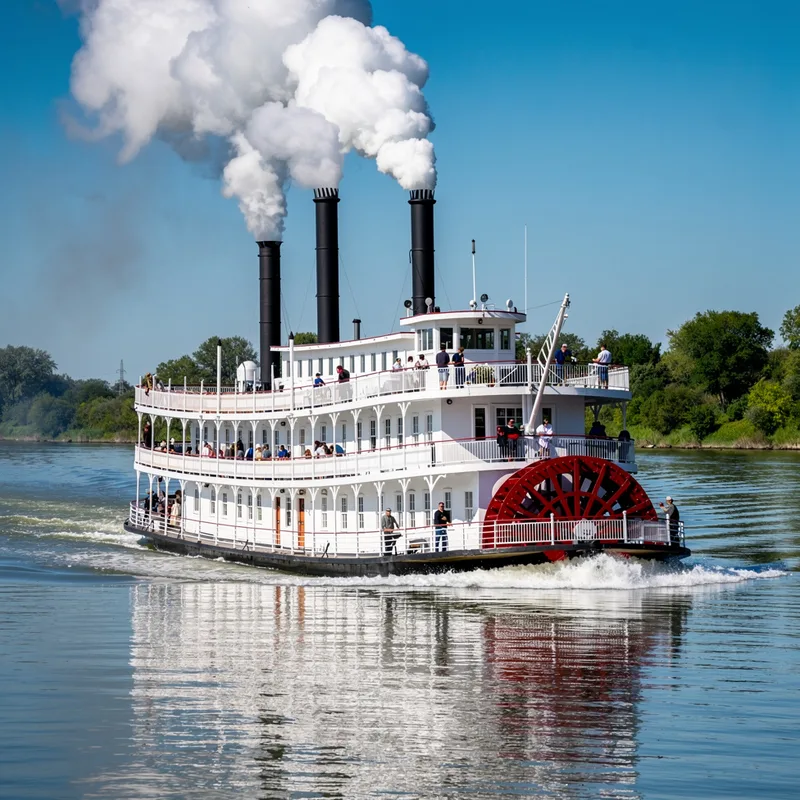
steamer
 16
3.9
16
3.9

- noun
- /ˈstiːmər/
- Archaic
- In the spring of 1939, Bonhoeffer caught a steamer back to New York, to the safety of Manhattan.
- paddle steamer
- river steamer
- steamer ships
Loading YouTube…
Watch on YouTubeRocket steamer, Paddle steamer, paddle steamer.
- Rocket steamer, Paddle steamer, paddle steamer.
Examples
-
Stenk followed them on board a cargo steamer bound for London.
-
Right now, there's a steamer bound for Canada with one empty stateroom.
-
You can drive, you know, or take the little steamer, if you like.
-
The ship was very different from the friendly canal steamer of this summer.
Fiction book (1992) -
- I met her on a steamer coming up from Shanghai.
-
After their adventures in Cape Town, they had taken a steamer for Southampton.
Fiction book (2001) -
We heard music behind and were overtaken by a steamer full of passengers gazing at us.
Academic text (1997) -
Johanna came on the coastal steamer with her children and Wendla as soon as school was out.
Fiction book (1992) -
And he journeyed from Bombay on this ship, the Italian steamer the Pilsner.
-
The tourist took a historic cruise on a steamer that traveled along the Mississippi River.
Synonyms
 15
5.6
15
5.6
A boat powered by steam that worked on rivers in the 1800s
 6
3.7
6
3.7
A ship powered by steam engines
 1
7.7
1
7.7
A steam boat with big wheels on the sides that push it through rivers or lakes
 1
8.6
1
8.6
A cargo ship that sails without a fixed route, carrying goods when available


 1
6.6
1
6.6
A boat that uses a steam engine and large paddle wheels to move
 1
3.2
1
3.2
A large river boat with big wheels that push water to move

A steamboat with a large paddle wheel at the back used on rivers

A steamboat with a large paddle wheel on each side that moves it through water
Compounds
- Archaic
1
8.6
A cargo ship that sails without a fixed route, carrying goods when available

- Archaic
A machine that uses steam to soften and warm animal feed before giving it to animals


How Big

Surface Forms
Morphology
Etymology
Steamer for a ship comes from steam meaning 'hot vapor' and the ending -er meaning 'one that'. So a steamer is a ship powered by steam engines, which is why it moved by steam rather than by sails.