
shrike
 2
9.9
2
9.9

- noun
- /ʃraɪk/
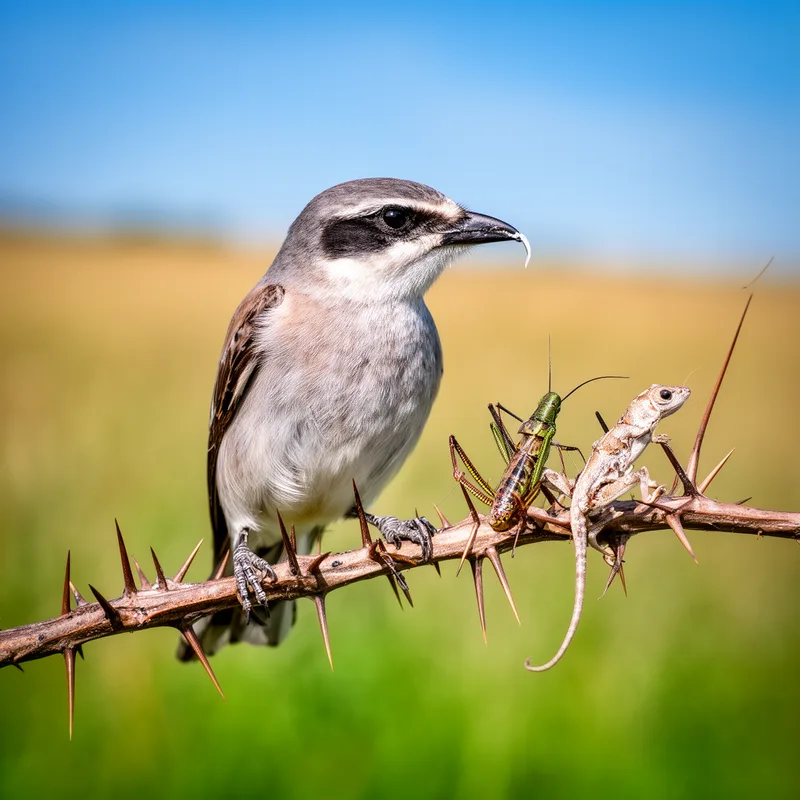
- The shrike is known for its distinctive feeding behavior, often impaling its prey on thorns.
- migrating shrike
- loggerhead shrike
- shrike's decline
Examples
-
Temple says the fire ant creates a sterile habitat for the wintering shrike; the migrating shrike settles into this habitat without enough food to support it through the winter.
Academic text (1994) -
Small warblers and flycatchers flitted from thicket to tall tree, while tiny stints, redstarts, and shrikes darted from branch to branch.
Fiction book (1990) -
Further investigation revealed that the shrike and fire ant are direct competitors for food sources.
Academic text (1994) -
The shrikes are quite aggressive this time of year.
-
In the 1990s, the San Clemente Island loggerhead shrike population declined to as few as 14 individuals.
Academic text (2011) -
The wildlife biology group at Texas Tech also found loggerhead shrike populations significantly lower in imported fire ant territory.
Academic text (1994) -
Ecologists were long puzzled by the bird's decline because the shrikes had a good breeding habitat and a high reproductive success rate.
Academic text (1994) -
The scientists looked at changes in the shrike's winter habitat and found that, in addition to changes in land use, the shrike's decline in particular counties directly correlated with an increase in fire ants in the same areas.
Academic text (1994) -
Evidence suggests that, like the shrike, other migrating grassland birds, including the meadowlark, bluebird, and grassland sparrow, are declining in numbers because of the fire ant, says Temple.
Academic text (1994) -
THE SHRIKE IMPALES HIS FOES ON THE SPIKES OF THORN BUSHES.
Compounds

- Specialized

 1
9.3
1
9.3
A small North American bird with black eye bands that often sticks its food on thorns
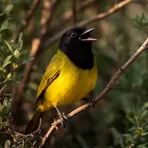
- South African
A small bright African bird with a black face and a musical song
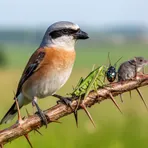
A small songbird in Europe that catches insects and small animals and puts them on thorns


- Specialized
A small northern bird that catches insects and small animals and sticks them on thorns

- Australian
A black and white bird like a crow that sings a pleasant song and copies other sounds
- Australian
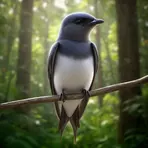
A small bird from Asia and Australia that looks like a swallow and has a hooked beak
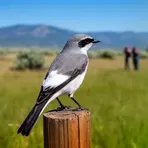
A small grey and white bird with a white patch on its rump found in western North America
Surface Forms
Etymology
Shrike comes from an old English word like shriek, which means 'a sharp cry'. It got this name because the bird makes a loud, sharp call and often impales its prey on thorns, so the name matches both its sound and fierce behavior.