
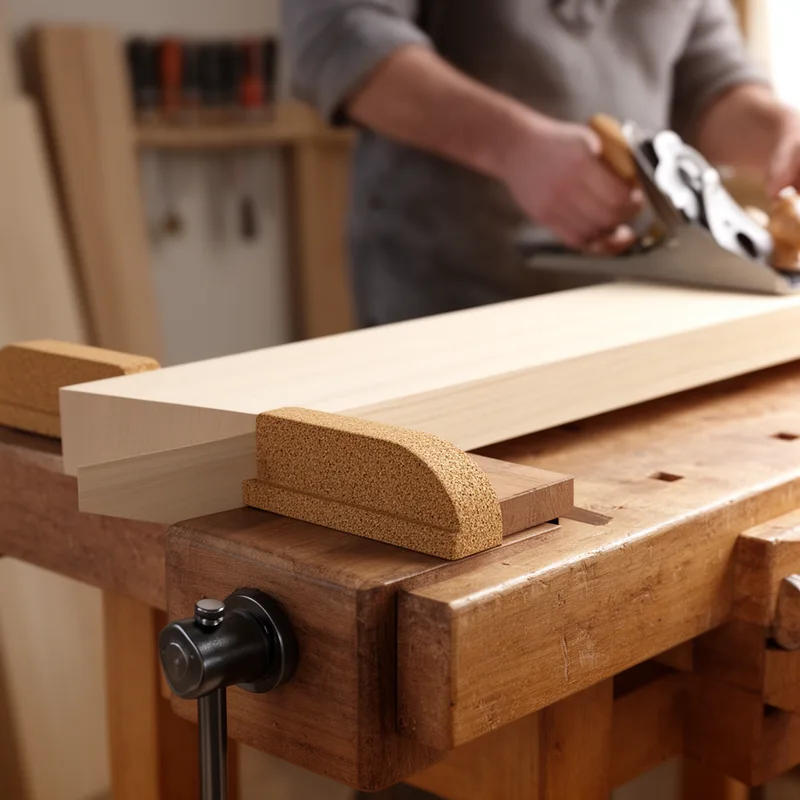
shoulder vise
- noun
- Specialized
- The carpenter used a shoulder vise to hold the plank steady while he planed it.
Examples
-
A shoulder vise is ideal for clamping boards without leaving marks on the wood.
-
Older workbenches often feature a built-in shoulder vise for precise woodworking tasks.
-
He used a shoulder vise to hold the wood in place.
-
The shoulder vise clamped the board tightly.
-
A shoulder vise is essential for holding lumber securely during woodworking projects.
-
The carpenter adjusted the shoulder vise to ensure the wood was held without any dents.
-
With the help of a shoulder vise, he was able to cut the wood accurately and cleanly.
Synonyms

 18
6.5
18
6.5

A tool attached to a workbench that holds something tightly while you work on it
A tool with padded jaws that holds wood firmly while you work on it

A strong clamp with soft jaws that holds wood firmly without damage
A tool fixed to a workbench with two parts that press to hold things while you work
How Gentle
- Specialized
 92
3.3
92
3.3
- Specialized
- Specialized
Surface Forms
Morphology
The compound is a straightforward noun–noun formation where 'shoulder' modifies 'vise', so a learner can infer it is a subtype of vise related to a 'shoulder' feature or placement. However, the precise technical sense (padded jaws to hold lumber without denting) is specialized and not directly predictable from the plain body‑part meaning of 'shoulder', so full understanding requires domain knowledge.
Etymology
The noun shoulder vise is named for how the tool works: its padded jaw presses the shoulder, the end or edge of a board, to keep the wood steady while you work. So the name describes a vise that 'holds wood firmly without leaving marks'.