
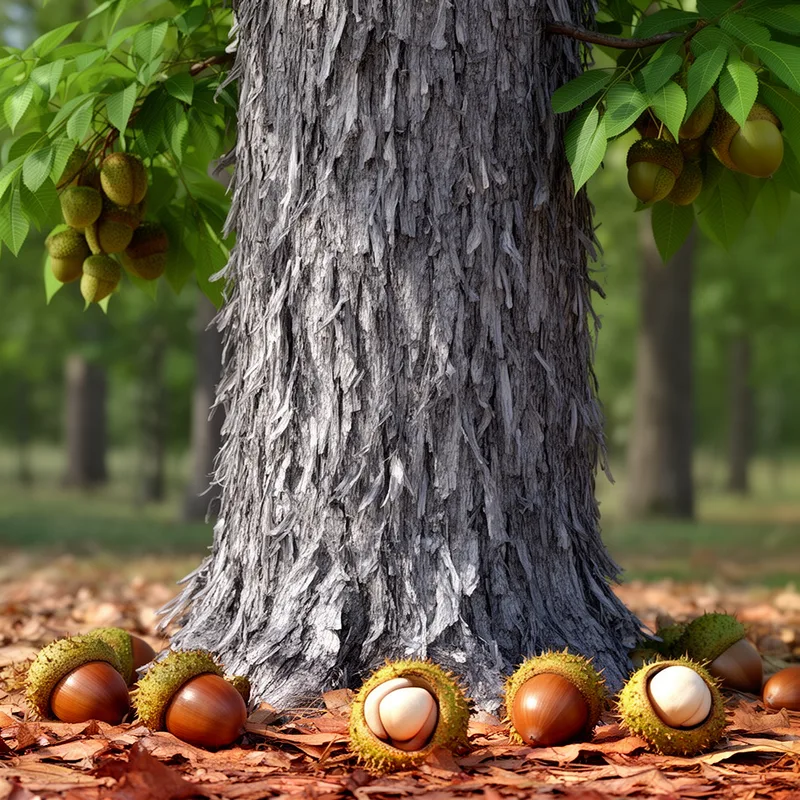
shellbark hickory
- noun
- /ˈʃɛlˌbɑrk ˈhɪkəri/
- US
- We identified a shellbark hickory by its distinctive shaggy bark in the forest.
Examples
-
The shellbark hickory produces some of the largest edible nuts among native hickories.
-
Carpenters valued the tough wood of the shellbark hickory for making durable tools.
-
The shellbark hickory tree grows in rich, moist soils.
-
Many animals enjoy the nuts of the shellbark hickory.
-
The shellbark hickory produces some of the largest edible nuts among native hickories.
-
Carpenters valued the tough wood of the shellbark hickory for making durable tools.
-
We identified a shellbark hickory by its distinctive shaggy bark in the forest.
Synonyms

A North American hickory tree with thick, peeling grey bark and large edible nuts
A tree from eastern North America with large nuts and shaggy bark
Surface Forms
Morphology
This is a straightforward noun–noun compound where 'shellbark' describes a type of bark and 'hickory' names the tree; the overall meaning (a hickory with shell-like/shaggy bark and edible nuts) follows directly from the constituents. Such modifier+head taxonomic compounds are compositionally transparent and common across languages, so a B1 learner who knows both words should be able to infer the meaning.
Etymology
Shellbark hickory gets its name from the tree's loose, shaggy bark that peels in plates like a shell and from its nuts, which have a thick shell. So the name points to a hickory with 'shaggy bark' and large, 'edible nuts'.

