
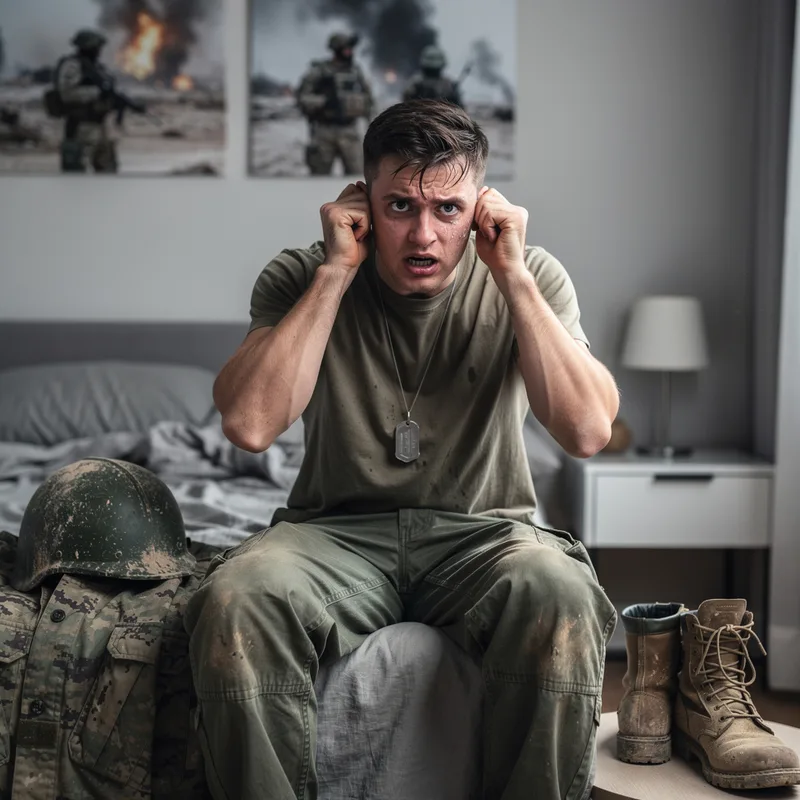
shell shock
 5
7.5
5
7.5

- noun
- /ʃɛl ʃɑk/
- Archaic
- He had shell shock from the constant rattle of jackhammers and the blaring of horns and sirens.
- shell shock victims
Loading YouTube…
Watch on YouTubeWelcome to a Great War special episode on shell shock in the First World War.
- Welcome to a Great War special episode on shell shock in the First World War.
- But it was at the Somme that special Centers for shell shock were opened in each army area.
Examples
-
DaCosta's concept of Soldier's heart fell away, and a British military psychiatrist named Charles Samuel Meyers coined a new term: shell shock.
Academic text (2012) -
At first, shell shock was thought to be caused by soldiers being exposed to exploding shells.
Blog text (10) -
Walker suffered from severe shell shock.
-
The effects of shell shock on WWI soldiers.
Blog text (10) -
This stigmatization of shell shock victims is repeated throughout the literature of the era.
Academic text (2012) -
Many believed that the number of timid soldiers, predisposed to shell shock, was markedly increased by the introduction of compulsory service.
Academic text (2012) -
Also arising out of the war and finding expression in the developing science of psychoanalysis was a new appreciation of the psychic effects of war—"shell shock," as it was called then, or "post-traumatic stress disorder" now.
Academic text (2002) -
Many veterans of the war suffered from shell shock, which left them emotionally disturbed.
-
The military provided support for those dealing with shell shock after the conflict ended.
-
Psychiatrists recognized shell shock as a serious condition affecting soldiers long after they returned home.
Synonyms
 65
6.1
65
6.1
A mental health problem after a very frightening event that causes reliving the event, feeling numb, and guilt
 2
4.4
2
4.4
A long-lasting problem in the mind after a very frightening event that causes flashbacks, strong fear, and avoidance of reminders
 2
8.2
2
8.2
Strong tiredness and fear that soldiers feel after long fighting

A mental condition soldiers get after long fighting that causes extreme tiredness, anxiety, and nightmares

Strong emotional problems soldiers get after war that cause worry and bad dreams
How Severe
- Specialized
2
4.4

- Archaic
5
7.5
- Specialized
304
4.8
704
2.8
36
2.7
Surface Forms
Morphology
The compound is a straightforward noun+noun composition where 'shell' (an artillery projectile) modifies 'shock' (a strong traumatic/distress reaction), so a learner who knows both words can infer it denotes trauma caused by shells/bombardment. While clinical or historical nuances (now often labelled PTSD) may require exposure, the basic meaning is directly derivable from the constituents.
Etymology
Shell shock comes from World War I, when soldiers were near exploding shells and felt a sudden shock to their mind and body. So, the phrase came to mean 'severe stress and emotional harm caused by fighting'.