
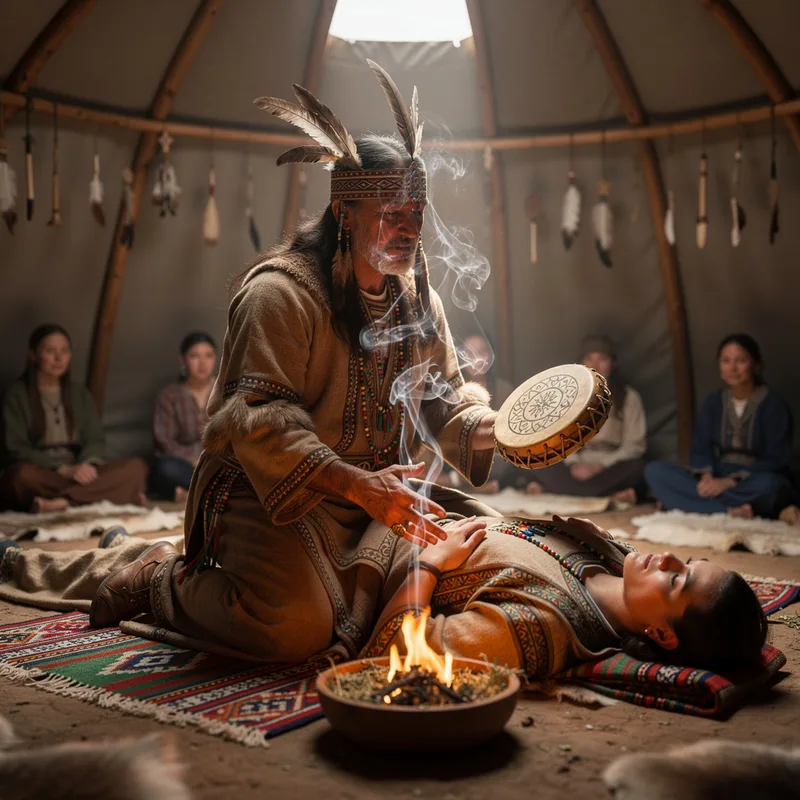
shamanistic
 1
9.9
1
9.9

- adjective
- /ˌʃɑːməˈnɪstɪk/
- Within shamanistic cultures, it is secrecy rather than publicity that sanctifies.
- shamanistic experience
- shamanistic and animistic
Examples
-
I had some important experiences with shamanistic journeying.
Academic text (1993) -
According to Li, social behaviors (which are always ritually significant) began in shamanistic ceremonies and gradually became accepted social norms.
Academic text (2016) -
More often than not, his religious views are more connected to the views of animistic or shamanistic faiths than to Christian tradition.
Academic text (1994) -
Unbeknownst to me at that early stage of my fieldwork, there were two men with recognized shamanistic power in the settlement.
Academic text (1996) -
Music for the Wa is thus highly functional in maintaining the group's social collaboration and accompanying shamanistic rituals and festivals.
Academic text (2015) -
The Proteus story, as well as that of the Sumerian Enki-Oannes, has definite shamanistic and totemic elements.
Academic text (1995) -
Recently, Wilber (1986:75ff) placed shamanistic experience within the context of a transpersonal view of evolution.
Academic text (1990) -
The ritual behind the ceremony of the full moon brew is shamanistic.
-
Much has been written about the shamanistic elements in Di Mare's art.
-
The surrounding walls are covered in shamanistic murals.
Synonyms
 3
7.8
3
7.8
Related to people who talk to spirits and lead healing ceremonies
Relating to people who connect with spirits and their ceremonies
Surface Forms
Morphology
Etymology
Shamanistic comes from shaman, an old Siberian word meaning 'one who knows' or 'seer'. A shaman acted as a healer and spirit guide, so shamanistic describes ceremonies and practices about healing and the spirit world.