
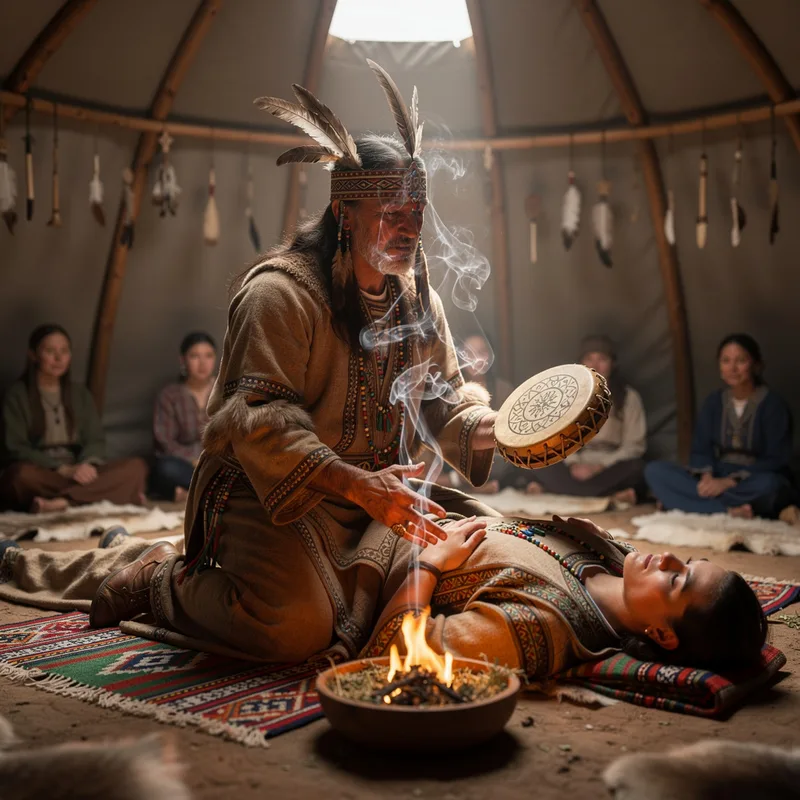
shamanistic
 1
9.9

- adjective
- /ˌʃɑːməˈnɪstɪk/
- Within shamanistic cultures, it is secrecy rather than publicity that sanctifies.
- shamanistic experience
- shamanistic and animistic
Examples
-
I had some important experiences with shamanistic journeying.
Academic text (1993) -
According to Li, social behaviors (which are always ritually significant) began in shamanistic ceremonies and gradually became accepted social norms.
Academic text (2016) -
More often than not, his religious views are more connected to the views of animistic or shamanistic faiths than to Christian tradition.
Academic text (1994) -
Unbeknownst to me at that early stage of my fieldwork, there were two men with recognized shamanistic power in the settlement.
Academic text (1996) -
Music for the Wa is thus highly functional in maintaining the group's social collaboration and accompanying shamanistic rituals and festivals.
Academic text (2015) -
The Proteus story, as well as that of the Sumerian Enki-Oannes, has definite shamanistic and totemic elements.
Academic text (1995) -
Recently, Wilber (1986:75ff) placed shamanistic experience within the context of a transpersonal view of evolution.
Academic text (1990) -
The ritual behind the ceremony of the full moon brew is shamanistic.
-
Much has been written about the shamanistic elements in Di Mare's art.
-
The surrounding walls are covered in shamanistic murals.
Synonyms
 3
7.8
Related to people who talk to spirits and lead healing ceremonies

 1
9.9
Relating to people who connect with spirits and their ceremonies
Surface Forms
Morphology
Etymology
Shamanistic comes from shaman, an old Siberian word meaning 'one who knows' or 'seer'. A shaman acted as a healer and spirit guide, so shamanistic describes ceremonies and practices about healing and the spirit world.