
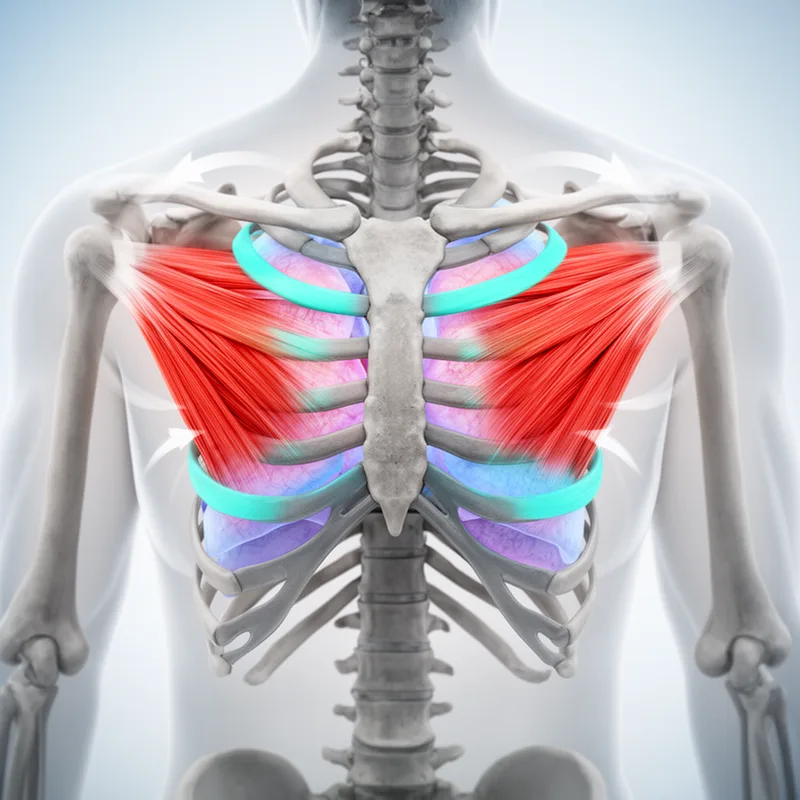
serratus posterior
- noun
- /ˈsɛrətəs pəˈstɪər/
- Specialized
- The serratus posterior plays a crucial role in pulling the rib cage down during exhalation.
Examples
-
The serratus posterior assists in moving the ribs during respiration.
-
Injury to the serratus posterior can cause pain in the upper back.
-
During deep breathing, the serratus posterior helps expand the thoracic cavity.
-
The serratus posterior muscle is essential for proper breathing.
-
He has strong serratus posteriors from years of training.
-
When performing certain exercises, the strength of the serratus posterior can enhance overall upper body movement.
-
Rehabilitation programs often include stretches for the serratus posterior to improve flexibility in the back.
Synonyms

A back muscle that pulls the ribs down and back
A part of the back that pulls the ribs down and back
Antonyms
- Specialized
A muscle on the side of the chest that moves the shoulder blade and helps lift the ribs
Surface Forms
Morphology
The term is compositionally built from Latin-derived anatomical elements: 'serratus' denotes a saw-toothed muscle and 'posterior' signals a rear location, so a learner who knows both constituents can infer it refers to a rear (back) serrated muscle. Although technical, this follows standard anatomical naming conventions found across languages, making the meaning derivable from the parts rather than idiomatic.
Etymology
Serratus posterior comes from Latin words meaning 'saw' and 'back'. The word serratus refers to a saw-like edge and posterior means at the back, and the muscle has a saw-like shape on the upper back that helps pull the ribs down, so the name fits both how it looks and what it does.

