
to separate off
- phrasal verb
 :
separar
:
separar
- The architect designed walls to separate off different spaces within the open concept layout.
Examples
-
Then between this post here and this post is sort of a wall to separate that front sort of little coffee area, which will just be really a kids playroom.
-
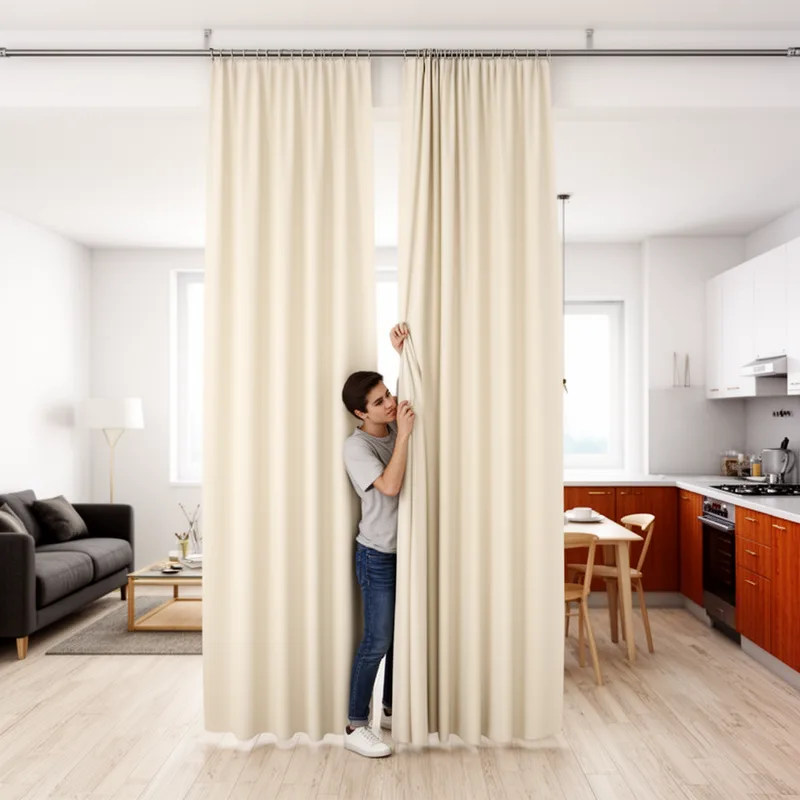
We used a screen to separate off the dining area from the living room.
-
So we've accomplished one objective, which is to separate the problem of finding translation from the problem of finding rotation.
-
You have to actually separate yourself off from those people who may claim to be believers but aren't really believers.
-
They used curtains to separate off the classroom from the hallway during the activity.
Synonyms

 680
1.1
680
1.1

To split something into parts or groups
 513
1.3
513
1.3
To break something into two or more parts
 297
1.9
297
1.9
To break into parts or pieces
 256
4.2
256
4.2
To keep someone or something apart from others
 47
2.6
47
2.6
To divide something into smaller parts
 24
7.4
24
7.4
To separate parts of your life, work, or feelings so they stay apart
 12
3.5
12
3.5
To divide something into separate parts
 4
3.7
4
3.7
Surround an area with a fence to stop people from entering
 2
3.9
2
3.9
To keep something separate for a special use or to show it as different


 1
3.9
1
3.9
To divide a space using a wall or screen
 1
4.1
1
4.1
Make part of a room private using a curtain or divider

To make part of a room private by closing a curtain

To separate people or part of a place by putting up a barrier
Antonyms


How Separated

Surface Forms
Morphology
The sense 'to divide or partition' is directly derivable from 'separate' (to split into parts) combined with the particle 'off' (away/from), yielding a compositional meaning of moving or setting something apart. This verb+particle pattern is common and cross-linguistically transparent, so a B1 learner who knows both constituents would readily infer the MWE's meaning.
Etymology
Separate off comes from the simple image of putting up a small wall, screen, or curtain to move one area away from another. Here separate means to make two parts and off shows moving one part to the side, so the phrase means 'to divide or keep apart'.