
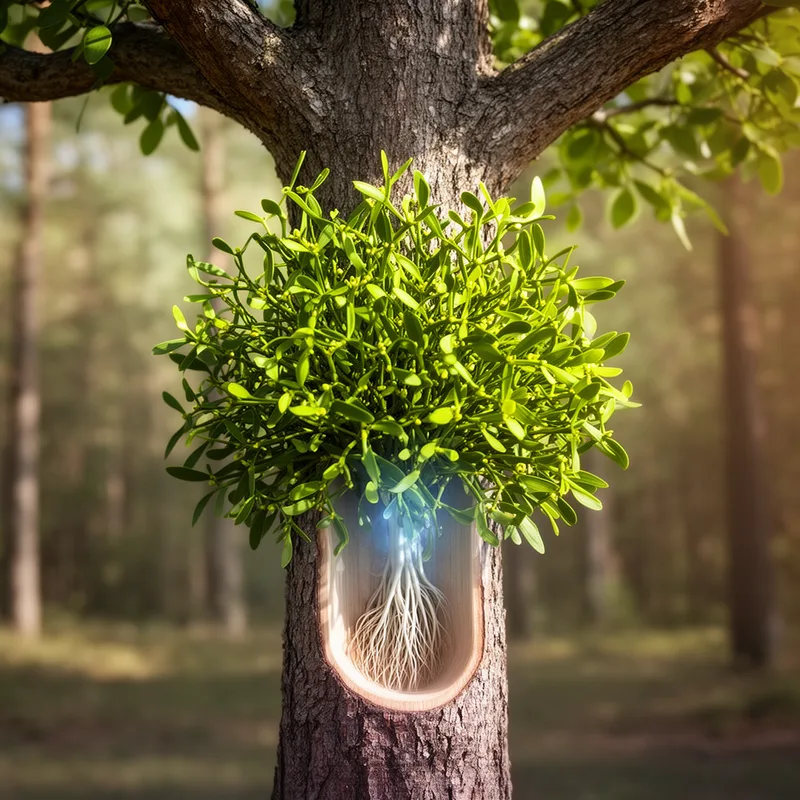
semiparasitic
- adjective
- /ˌsɛmiˈpærəˌsɪtɪk/
- Specialized
- Many mistletoes are considered semiparasitic because they can photosynthesize but still rely on their host plants for water and nutrients.
Examples
-
Some plants display a semiparasitic relationship, drawing sustenance from hosts without being entirely dependent.
-
The semiparasitic plant thrives in nutrient-poor soil.
-
The semiparasitic nature of rhinanthus makes it unique among wildflowers in meadows.
-
Many semiparasitic species can photosynthesize effectively.
-
Mistletoe is classified as a semiparasitic plant because it can photosynthesize while still drawing water and nutrients from its host tree.
-
In the wild, certain orchids exhibit semiparasitic traits, allowing them to benefit from nearby plants while still performing photosynthesis.
-
The semiparasitic characteristics of some flowers enable them to survive in environments where other plants might struggle.
Synonyms


 1
9.9
1
9.9
A plant that makes food from sunlight but takes water and nutrients from other plants
Antonyms

- Offensive
11
6.6
A person or thing that lives by taking from others without giving anything back
How Parasitic

Surface Forms
Morphology
Etymology
Semiparasitic combines semi- meaning 'partly' and parasite, a word that originally meant 'someone who eats at another's table' in Greek, which gives the image of taking from a host. So a semiparasitic plant is partly a parasite — it takes water and nutrients from another plant but can still use sunlight to make some of its own food.