
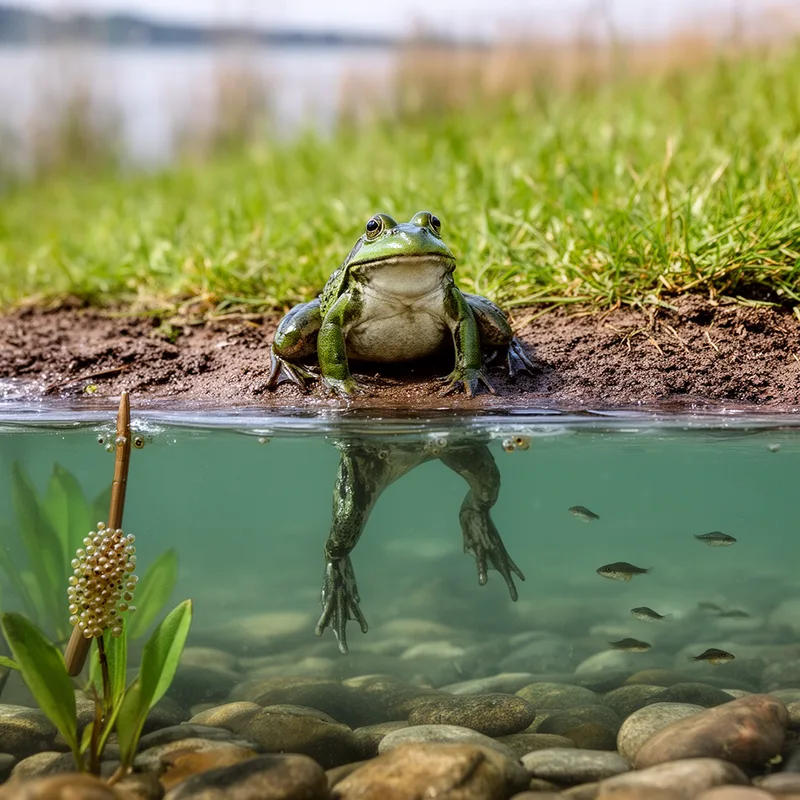
semiaquatic


 1
6.3
1
6.3
- adjective
- /ˌsɛmiəˈkwɑtɪk/
- Seasonal changes in a turtle's environment, as well as its behavioral responses to those changes, may offer clues to the evolution of basking habits and explain differences among semiaquatic and aquatic turtle families.
- semiaquatic and aquatic
Examples
-
Most of them, however, can be found among aquatic and semiaquatic mammalian species.
Academic text (1995) -
Marsh and Cope therefore suggested that sauropods were semiaquatic creatures.
Academic text (2007) -
Some semiaquatic species, such as Mertens' water monitor (V. mertensi), use their body and tail to herd fish into shallow water.
Academic text (2003) -
If sauropods were semiaquatic, their fossils should be embedded in the coals of ancient swamps or the limestones formed by lagoons.
Academic text (2007) -
Nutrias are semiaquatic rodents that live in water and on land, often seen in wetlands.
-
Many semiaquatic animals, like beavers and otters, thrive in habitats where they can access both land and water.
-
The semiaquatic plants along the riverbank grow well in damp soil and also withstand occasional flooding.
Synonyms
 23
6.2
23
6.2
Able to move on both land and water, like some vehicles

Living partly on land and partly in water
Found on both land and in water
Antonyms
How Aquatic

Surface Forms
Morphology
semiaquatic = aquatic (transparent) = semi + aqua + tic
The word is transparently formed by adding semi- to aquatic, yielding the clear meaning 'partly aquatic'.
Etymology
The word semiaquatic comes from semi- ('half') and aqua ('water'), the same 'aqua' you see in aquarium, so it means 'half water'. That's why we use it for animals like frogs that live partly in water and partly on land.