
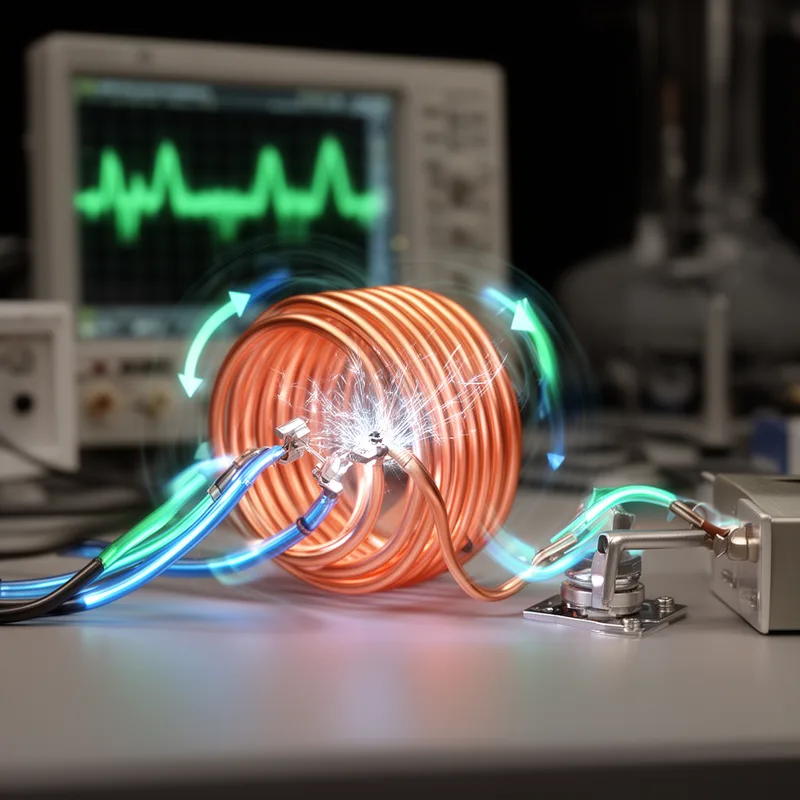
self-induction
- noun
- /ˌsɛlfɪnˈdʌkʃən/
- Specialized
- Rapid switching in circuits can cause large voltage spikes due to self-induction.
Examples
-
The principle of self-induction is essential in the design of transformers and inductors.
-
The unit of self-induction is called the henry.
-
The concept of self-induction is crucial in electrical engineering.
-
Can you explain self-induction in simple terms?
-
The principle of self-induction explains how changing current can create an electromotive force in a circuit.
-
In electrical engineering, understanding self-induction is vital for designing circuits that minimize voltage spikes.
-
Inductors in a circuit utilize self-induction to store energy when the current fluctuates.
Synonyms
A coil property that makes a changing electric current create a voltage in itself
Surface Forms
Morphology
Etymology
Self-induction breaks into self- meaning 'by itself' and induction from a root meaning 'to lead in' or 'to cause', like the common word induce. So self-induction is the idea of a circuit 'causing' a voltage in itself when its current changes, which is why it is measured in henries.

