
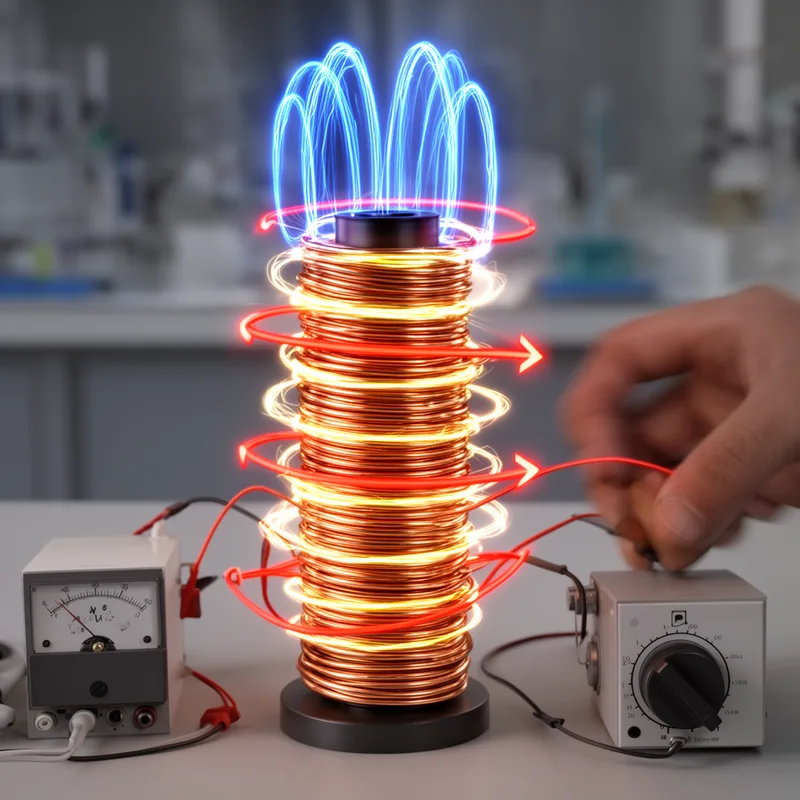
self-inductance
- noun
- /ˈsɛlf ɪnˈdʌktəns/
- Specialized
- Engineers measured the self-inductance to determine how the circuit reacted to changes in current.
Examples
-
Understanding self-inductance is crucial for designing efficient electrical circuits in modern technology.
-
The self-inductance of the coil increased as the electric current fluctuated.
-
The self-inductance represents an additional load in series with the resistance of the net.
Academic text (1999)
Synonyms
A number showing how strongly a coil creates voltage when the electric current changes

Property of a circuit that produces a voltage when the electric current changes

A voltage that appears in a circuit when its current changes
Surface Forms
Morphology
self-inductance = inductance (semi-transparent) = self + induct + ance
The word is formed by adding self- to inductance, and the internal logic is clear, but the result is a specialized technical term rather than everyday vocabulary.
Etymology
Self-inductance joins self ('in itself') and inductance, from induce meaning 'to cause' or 'to bring about'. So self-inductance is the way a coil or circuit causes an electric force in itself when the current changes, which is why it resists sudden changes in current.

