

seif dune
- noun
- /seɪf duːn/
- Specialized
- The Sahara Desert is home to many impressive seif dunes stretching for miles across the landscape.
Examples
-
Scientists studied the formation of seif dunes to understand how wind shapes desert environments.
-
A seif dune can reach several hundred kilometers in length, making it a prominent feature of desert regions.
-
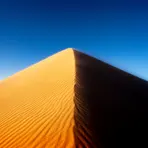
The seif dune stretched across the desert landscape.
-
Many seif dunes can be found in the Sahara.
-
The Sahara Desert is home to many impressive seif dunes stretching for miles across the landscape.
-
Scientists studied the formation of seif dunes to understand how wind shapes desert environments.
-
A seif dune can reach several hundred kilometers in length, making it a prominent feature of desert regions.
Synonyms
 69
2.7
69
2.7

A hill of sand that wind makes on a beach or in a desert
 14
3.2
14
3.2
A hill of sand that wind makes near a beach or in a desert
How Long

Surface Forms
Morphology
seif + dune
This phrase combines the general English noun 'dune' (a hill of sand), which gives learners a basic category, with 'seif', a specialized loanword/technical label not found in common dictionaries. Because the specific properties that distinguish a seif dune (long, narrow, sharp-crest, wind-oriented) are lexical knowledge tied to 'seif' and are not predictable from general English vocabulary, the expression is only partially transparent to a B1 learner.
Etymology
Seif dune may come from the Arabic word seif meaning 'sword' and dune meaning a hill of 'sand', because these dunes are long, narrow hills with a sharp crest like a blade. So the image of a 'sword' of sand helps explain why the term means a long, narrow sand hill shaped by 'wind'.