
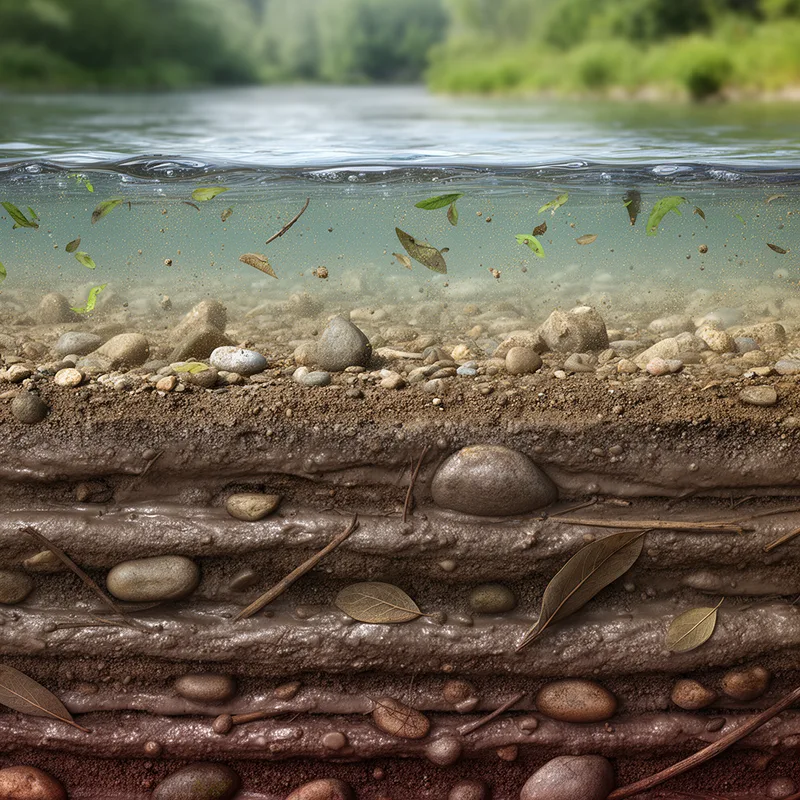
sedimentary clay
- noun
- /ˌsɛdɪˈmɛnˌtɛri kleɪ/
- Specialized
- When wet, sedimentary clay becomes smooth and sticky, making it useful for ceramics.
Examples
-
Farmers in the region struggle to grow certain crops because the soil contains a high proportion of sedimentary clay.
-
Many sedimentary clay deposits are found in areas where ancient lakes once existed.
-
The archaeologist discovered a pot made from sedimentary clay along the river bank.
-
The sedimentary clay formed near the riverbank.
-
Many sedimentary clays have high plasticity.
-
Farmers in the region struggle to grow certain crops because the soil contains a high proportion of sedimentary clay.
-
When wet, sedimentary clay becomes smooth and sticky, making it useful for ceramics.
Synonyms

 171
1.0
171
1.0

A heavy sticky earth that is soft when wet and used to make pots and bricks
 57
5.7
57
5.7
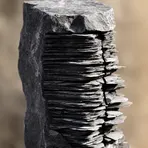
A rock made from clay that splits into thin flat layers

 1
5.5
1
5.5
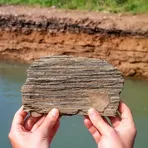
A hard rock that forms when mud or clay presses together and becomes solid
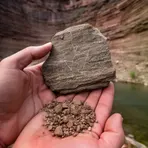
A hard rock made of tiny bits of clay pressed together

A rock made mainly of clay that forms in layers
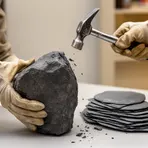
A hard rock made from clay that does not split into thin sheets
How Consolidated

Surface Forms
Morphology
The meaning is compositionally transparent: 'sedimentary' (formed from deposited sediment) modifies 'clay' to mean clay produced by accumulation and compaction of sediments. This follows regular English modifier+noun composition and has direct equivalents in many languages, so a B1 learner who knows both constituents should be able to infer the meaning.
Etymology
The noun sedimentary clay comes from two simple words: sedimentary, meaning things left in thin layers, and clay, meaning soft, sticky earth. Picture fine soil and plant bits carried by water or wind that settle in those layers and get pressed together until they become smooth and sticky. So, sedimentary clay means clay 'made by layers' of material left and pressed together over time.