

secondary sex character
- noun
- /ˈsɛkəndɛri sɛks ˈkɛrɪktər/
- Specialized
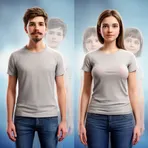
- Facial hair is a secondary sex character that usually appears in males during puberty.
Examples
-
The development of a deeper voice is considered a secondary sex character in humans.
-
Differences in musculature between men and women are examples of secondary sex characters.
-
The secondary sex character of males includes facial hair.
-
She noticed her secondary sex characters developing during puberty.
-
Facial hair is a secondary sex character that typically develops in males during adolescence.
-
The development of a deeper voice is a notable secondary sex character that distinguishes adult men from women.
-
During puberty, physical changes such as increased body hair are examples of secondary sex characters associated with gender.
Synonyms


 1
6.8
1
6.8
A body change at puberty that shows sex, like body hair and a deeper voice
 1
6.5
1
6.5
A physical change during puberty that shows male or female differences and does not help make babies
Surface Forms
Morphology
The meaning is directly compositional: 'secondary' (not primary) + 'sex' (biological male/female) + 'character' (trait) yields 'a non-primary trait related to biological sex.' Although somewhat technical, the components combine in a straightforward, cross-linguistically familiar way, so a B1 learner who knows the words can reasonably infer the intended meaning.
Etymology
Secondary sex character comes from the idea that some features are secondary ('second' or not the main), they show sex (being male or female), and a character is a visible feature. These are not the body parts used for 'making babies' but signs like facial hair or a deeper voice, so the name explains why they show sex without being for 'reproduction'.