
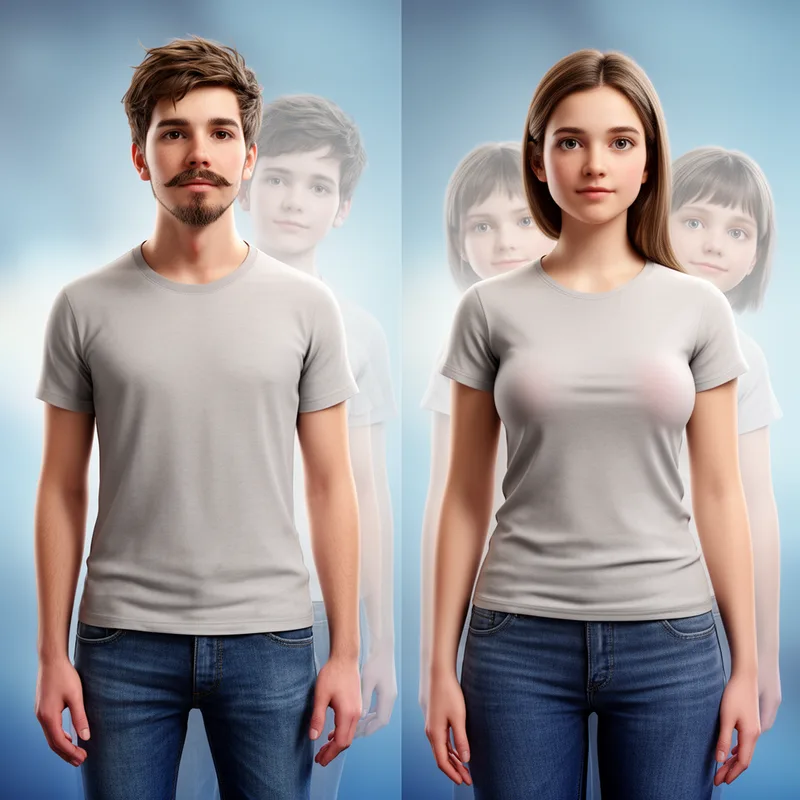
secondary sex characteristic


 1
6.5
1
6.5
- noun
- /ˈsɛkəndɛri sɛks ˌkɛrɪktəˈrɪstɪk/
- Specialized
- The appearance of secondary sex characteristics, like body hair and changes in muscle mass, marks the transition into adulthood.
- male secondary sex characteristics
Examples
-
Physical changes resulting from the growth spurt and hormonal changes are expressed in the emergence of secondary sex characteristics and a focus on bodily functions and image.
Academic text (2002) -
Secondary sex characteristics such as body hair, breasts, and vocal changes occur.
Academic text (2002) -
The hormones promote the development of female secondary sex characteristics.
Blog text (20) -
Patients with Rokitansky syndrome and AIS have normal secondary sex characteristics and external genitalia.
Academic text (2012) -
An obvious example is the impressive morphological reorganization occurring in humans at puberty, when secondary sex characteristics like breasts or facial hair first appear.
Academic text (1998) -
But in species where natural selection favors the continued association of adults of both sexes within herds, the females mimic horns and other male secondary sex characteristics all the way to maturity.
Academic text (2006) -
WT zebrafish males exhibited normal secondary sex characteristics, including a slender body, darker yellow pigmentation, and the presence of breeding tubercles (Dranow et al. 2013).
Academic text (2017) -
During puberty, boys develop noticeable secondary sex characteristics, such as facial hair and a deeper voice.
-
Secondary sex characteristics, including breast development and wider hips, are prominent features in adult females.
Synonyms
1
6.8
A body change at puberty that shows sex, like body hair and a deeper voice

A physical feature that differs between males and females, like body hair or a deep voice
Surface Forms
Morphology
secondary + sex + characteristic
The phrase is transparently compositional: 'secondary' (not primary), 'sex' (biological male/female) and 'characteristic' (feature) combine to mean a non-reproductive sex-related feature that appears later or is not primary. While somewhat technical, the logic is clear and cross-linguistically paralleled (e.g. Spanish/French cognates), so a B1 learner who knows the constituents can reasonably infer the meaning.
Etymology
Secondary sex characteristic comes from biology and gives a clear image: secondary means 'later', sex means 'male or female', and characteristic means 'a feature'. So it names features like facial hair, breast growth, or voice deepening that appear at puberty to show a person's sex but are not the main sex parts.