
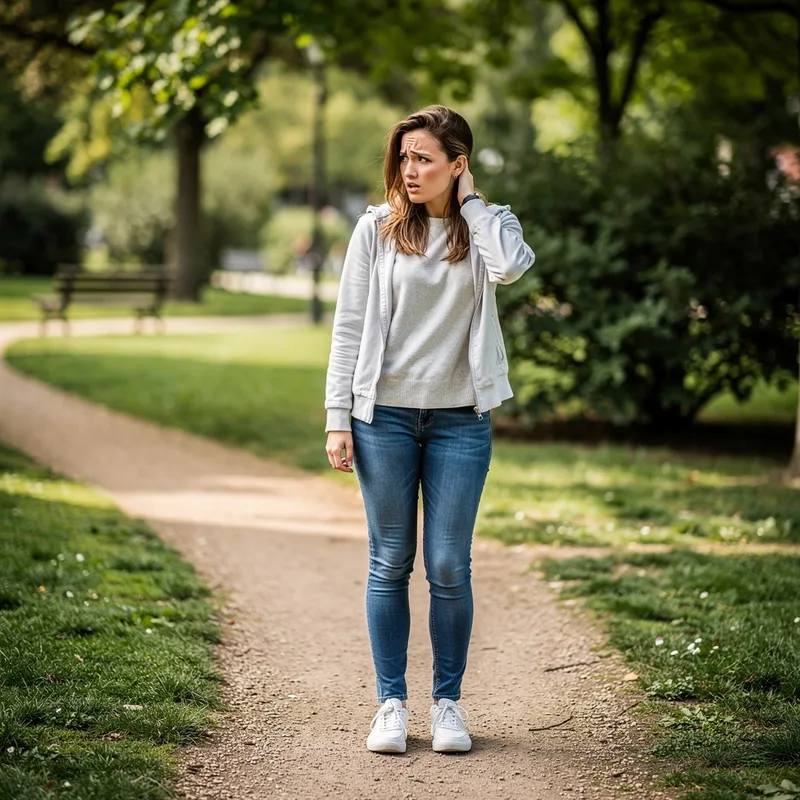
to second-guess oneself
 9
7.0
9
7.0

- phrasal verb
- /ˈsɛkəndˌɡɛs wʌnˈsɛlf/
- Informal
- After making her choice, she started to second-guess herself, wondering if she had made the right decision.
- start second-guessing
- constantly second-guessing
- begin second-guessing
Examples
-
Have your friends and family ever made you second-guess your goals?
Blog text (11) -
It felt so right to be there that, of course, I started second-guessing myself immediately.
Fiction book (1997) -
I would take more action and stop second-guessing myself.
Blog text (20) -
We are all just trying to do what seems right for ourselves and our family, and we all second-guess ourselves at times.
Blog text (32) -
I was constantly second-guessing myself.
Blog text (12) -
But I am done making my own life harder by constantly second-guessing myself.
Blog text (3) -
I'd been in the Real World, yet was second-guessing myself.
Blog text (33) -
Knowing all the reasons and spending hours second-guessing yourself won't change anything, and it simply does not matter.
Blog text (21) -
I'm constantly second-guessing myself about grammar and spelling.
Blog text (12) -
I deposited a $1,000 and sat on it for a while because I was still scared and second-guessing myself.
Blog text (2)
Synonyms
 27
6.1
27
6.1
To criticize a decision after you know the result
How Unsure

Surface Forms
Morphology
second-guess + oneself
The parts 'second' (sense of 'again' or 'afterwards') plus 'guess' (to form an opinion) give a plausible compositional sense of rethinking or guessing again about one's actions, so a learner could infer a basic meaning. However, the idiomatic nuance—persistent self-doubt or the evaluative sense of criticizing one’s past choices—is an extended, partly metaphorical sense of the compound that is not fully predictable, so it is only partially transparent.
Etymology
Second-guess oneself may come from the simple image of making a second guess—like trying to predict what would happen again after you already know the result. So, it now means to keep 'doubting' your own decisions.