

seborrheic dermatitis


 1
8.8
1
8.8
- noun
- /ˌsɛbəˈriːɪk dɪrˈmætɪtɪs/
- Specialized
- This is a male with seborrheic dermatitis with evidence of secondary infections, both fungal and likely impetigo, as evidenced by the yellow crusts around the scratch marks.
- treat seborrheic dermatitis
- seborrheic dermatitis condition
Loading YouTube…
Watch on YouTubeVirtually all dandruff is actually a condition called seborrheic dermatitis.
- Virtually all dandruff is actually a condition called seborrheic dermatitis.
Examples
-
I have been told that I have seborrheic dermatitis, a common inflammatory skin condition that causes flaky white to yellowish scales to form on oily areas such as the scalp or inside the ear.
Blog text (20) -
Cradle cap is the term used when seborrheic dermatitis affects the scalp of infants.
Blog text (20) -
We feel that the most likely diagnosis is seborrheic dermatitis with secondary infection.
Blog text (10) -
Treatment of associated fungal infection is an integral part of the management of moderate to severe seborrheic dermatitis.
Blog text (10) -
Seborrheic dermatitis is the most common dermatologic condition to affect the external auditory canal.
Academic text (2001) -
Seborrheic dermatitis and scalp psoriasis can also lead to hair loss, so these conditions need to be kept under control in order to cure this problem.
Blog text (20) -
And that's where you get the redness and the itching from, from dander for seborrheic dermatitis is from an an inappropriate immune response.
-
Seborrheic dermatitis is a chronic inflammatory disorder that affects areas of the head and trunk where sebaceous glands are most prominent.
Blog text (10) -
Seborrheic dermatitis often appears as seborrheic dermatitis that causes red, scaly patches on the scalp and face.
-
Many people experience seborrheic dermatitis during the colder months when their skin becomes dry and irritated.
Synonyms
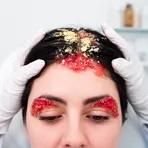
A long-lasting skin problem that makes oily, red, scaly patches on the scalp or eyelids
How Severe

Surface Forms
Morphology
The phrase is directly compositional: 'seborrheic' (relating to excess sebum/greasy secretions) modifies 'dermatitis' (inflammation/condition of the skin), so the overall meaning — a skin inflammation associated with oily/sebaceous activity — follows from the parts. While medically technical, the Latin/Greek-derived components and similar compounding patterns exist across languages, so a learner who knows both constituents can infer the meaning.
Etymology
Seborrheic dermatitis comes from old words for 'oil' and 'skin': sebum means 'oil', derma means 'skin', and -itis means 'sore'. So it names a skin problem that causes greasy, scaly patches and redness.