
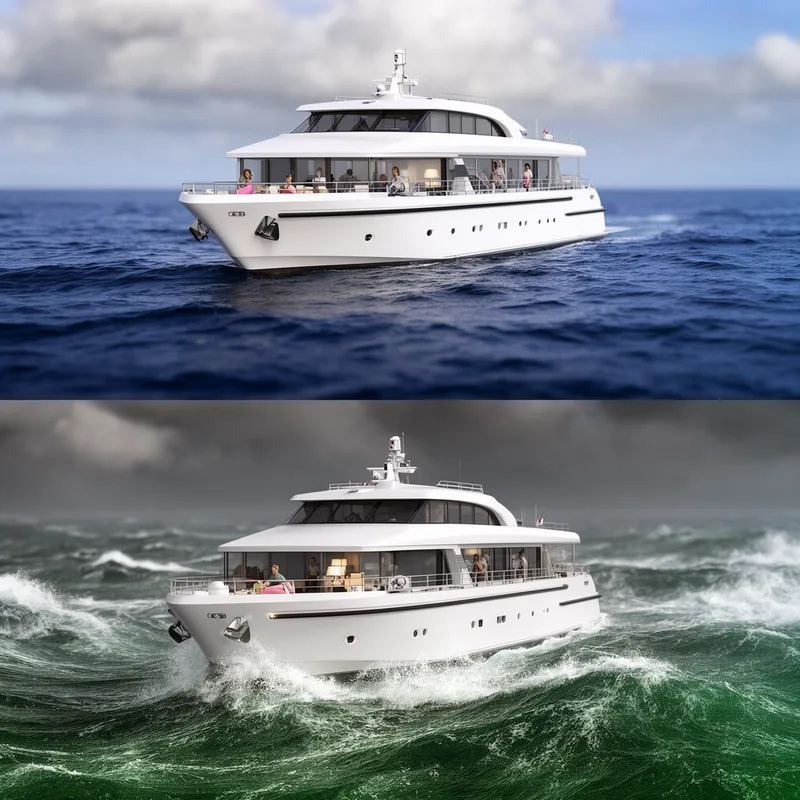
seakeeping


 1
7.5
- noun
- /ˈsiːkiːpɪŋ/
- Specialized
- seakeeping ability
Examples
-
Later, he dealt with the seakeeping analysis of ships and was instrumental in the development of a seakeeping panel code.
Academic text (2007) -
Later, he dealt with the seakeeping analysis of ships and was instrumental in the development of a seakeeping panel code.
Academic text (2007) -
At Germanischer Lloyd, he developed hydrodynamic seakeeping analysis methods for fixed and floating offshore structures, including mooring aspects and crane ship behavior.
Academic text (2007) -
The yacht's excellent seakeeping ensured a smooth ride even in rough waters.
-
Engineers focused on improving the seakeeping of the vessel to enhance safety in stormy conditions.
-
The cruise ship is renowned for its seakeeping abilities, allowing it to handle turbulent seas with ease.
Synonyms
 1
7.0
Being safe and fit for a ship to travel on the sea
 1
9.9
A ship or boat that stays steady and feels comfortable in rough seas
Surface Forms
Morphology
Etymology
Seakeeping is made from sea and keeping, and keep here means 'to hold' or 'to look after'. So, seakeeping is about how well a ship 'keeps' steady, safe and comfortable in different sea conditions.