
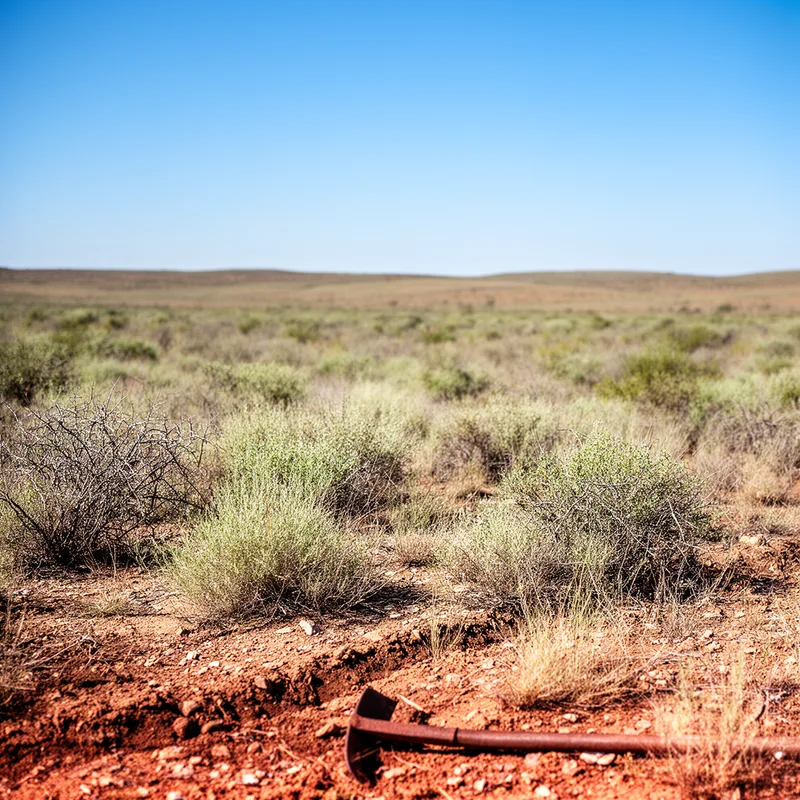
scrubland
 1
6.6
1
6.6

- noun
- /ˈskrʌbˌlænd/
- The scrubland was rugged and harsh, making it unsuitable for farming or large-scale agriculture.
- coastal scrubland
Examples
-
The Carabinieri fan out into the surrounding scrubland with guns drawn, but after ten minutes they give up the search.
Academic text (2004) -
Early in the twentieth century, rural blacks in southeastern Florida clustered on farm or scrubland.
Academic text (1992) -
In contrast, less than 1 percent of scrubland or forest was slip-scarred by the storm.
Academic text (1991) -
After World War I, persons of all races were located on farms or in towns separated by fields or scrubland.
Academic text (1992) -
There may only be a dozen or a hundred lions in the coastal scrublands.
Academic text (2009) -
Empty scrubland surrounds them.
Fiction book (1996) -
The increase in the extent of scrubland and woodland produced by the jays would also provide additional habitat for a range of endemic taxa.
Academic text (2011) -
Bantu farmer, left, oversees his field in the coastal scrublands of southern Tanzania.
Academic text (2009) -
The hikers trekked through the dry scrubland, surrounded by low shrubs and scrubby bushes.
-
Wildflowers bloom sporadically across the scrubland, adding color to the arid landscape.
Synonyms
 180
3.7
180
3.7
Wild land with many small trees and thick plants far from towns
 29
6.2
29
6.2
Low, thick bushes and small trees that grow on dry land
 1
4.1
1
4.1
A wild area with bushes and small trees, often in Australia
 1
4.6
1
4.6
Land that has mostly bushes and very few trees
An area covered mostly with low bushes and small woody plants

Open land with low bushes like heather and poor sandy soil
Antonyms

How Vegetated

Surface Forms
Morphology
Etymology
Scrubland is made from scrub ('low bushes') and land ('ground'), so the word names land that is covered with short, rough shrubs. A helpful image is a wide, dry area where only small bushes grow and farming is hard, which is exactly what scrubland means.