

shrubland
- noun
- /ˈʃrʌbˌlænd/
- Specialized
- The common wombat inhabits woodlands and shrublands of the temperate regions of southeastern Australia and Tasmania.
- shrubland vegetation
- grassland and shrubland
Examples
-
These areas typically had gentle slopes, and shrubland was the most common land-cover type (Supplementary Material 3).
Academic text (2017) -
The red fox is more at home at lower latitudes, where it inhabits prairies, shrublands, and forests.
Academic text (1998) -
The primary land cover types are shrubland and woodland dominated by pinyon.
Academic text (2017) -
"The landscape was dominated by acacia and grasses, probably representing a dry shrubland," Bush says.
Academic text (2011) -
Shrubland and grassland were the most strongly and positively associated with space-use intensity.
Academic text (2017) -
Woodland, forest, shrubland, and riparian areas typically were assigned higher permeability values than other land-cover classes.
Academic text (2017) -
Finally, very little solid information is available on the composition, dynamics, and productivity of Nepal's forests and shrublands, and on how these characteristics change under varying levels of human use.
Academic text (1990) -
The pressure that is being put on high-altitude forests and woodlands and on alpine shrublands along the popular trekking routes is of special concern.
Academic text (1993) -
In 50% of these sites, the lack of tree regeneration indicated that the sites had transitioned from a forest to a grassland or shrubland with a diminished capacity to sequester carbon.
Academic text (2011) -
The trail leads through a peaceful shrubland, filled with low bushes and wildflowers.
Synonyms

 180
3.7
180
3.7

Wild land with many small trees and thick plants far from towns
 61
2.2
61
2.2
A thick group of small trees and bushes
 29
6.2
29
6.2
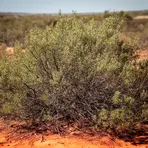
Low, thick bushes and small trees that grow on dry land
 1
6.6
1
6.6
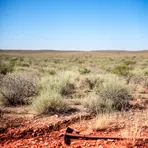
An area of land covered with short bushes and grasses that is hard to farm
 1
4.1
1
4.1
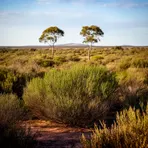
A wild area with bushes and small trees, often in Australia
 1
4.6
1
4.6
Land that has mostly bushes and very few trees

Open land with low bushes like heather and poor sandy soil
How Shrubby

Surface Forms
Morphology
Etymology
Shrubland is made from shrub and land. Shrub means a 'small bush' and land means an 'area of ground', so shrubland is ground covered with low bushes.