

scarabaeid beetle
- noun
- /ˈskɛrəˌbeɪd ˈbiːtəl/
- Specialized
- The scarabaeid beetle is famous for its distinctive horn-like projections on its head.
Examples
-
Farmers often find the scarabaeid beetle in fields, where some species can be agricultural pests.
-
She found a scarabaeid beetle in her garden.
-
Ancient Egyptians revered the scarabaeid beetle as a symbol of renewal and transformation.
-
The scarabaeid beetle is known for its distinctive shape.
-
Ancient Egyptians revered the scarabaeid beetle as a symbol of renewal and transformation.
-
Farmers often find the scarabaeid beetle in fields, where some species can be agricultural pests.
-
The scarabaeid beetle is famous for its distinctive horn-like projections on its head.
Synonyms

 11
9.9
11
9.9

A large dung beetle thought to be sacred in ancient Egypt
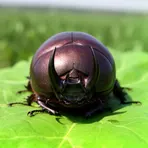
A large round beetle with a hard shell and horn-like spikes on its head

A large round beetle with a hard shiny shell and horns on its head
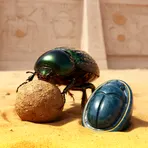
A large dung beetle that ancient Egyptians thought was sacred
Surface Forms
Morphology
The phrase is a straightforward compositional noun phrase: a beetle belonging to (or of the type scarabaeid), i.e., a member of the Scarabaeidae family. Although somewhat technical, the meaning is directly derivable from the constituents ('scarabaeid' + 'beetle') using common noun-modifier composition patterns, so a learner who knows both words would understand it.
Etymology
Scarabaeid beetle is named after the old scarab beetles that Ancient Egyptians used as a symbol of new life; imagine a round, strong beetle often shown with a shiny back and horn-like spikes on its head. So, the name now points to a 'stout-bodied' insect that often has horned projections on its head.