

scarab
 11
9.9
11
9.9

- noun
- /ˈskɛrəb/
- Literature
- In ancient Egyptian art, a scarab often represents the sun and is depicted rolling a ball of dung.
- scarab beetle
- scarab seal
Loading YouTube…
Watch on YouTubeSo if you see the beetle, that's a scarab or that's for good luck.
- So if you see the beetle, that's a scarab or that's for good luck.
- He throws open the window and a scarab beetle flies in and lands his palm.
- And So what I did was I had the art director's drawings of the separations and of these little scarab stamps.
- It is like it is a parasite that is dug deep into my brain, you know, in the mummy, the scarabs that crawl under your skin.
- But they wouldn't say that because it probably like murdered them or like I imagine trap them in a basement with some scarab beetles and ghosts.
Examples
-
The mythical power of Egyptian hieroglyphs and their mystical knowledge was compelling, and objects from scarabs all the way up to obelisks were bought, sold, and gifted.
Academic text (2011) -
Carvings on a scarab, found in the temple of Osiris, at Abadais.
-
Found this old scarab today.
-
In this scenario, the scarab would have been a symbol of success in battle.
Academic text (2009) -
In the dream, she had been given a valuable piece of golden jewelry in the shape of a scarab.
Academic text (1993) -
The children showed their parents the turquoise scarab pins that their new Egyptian friends had bought them in the Cairo market.
Fiction book (1993) -
My Egyptian friend wasn't mad when I wore a scarab bracelet with hieroglyphics on the back.
Blog text (8) -
The ancient Egyptians believed that the scarab symbolized rebirth and transformation.
-
Archaeologists discovered a beautiful scarab amulet in the ruins of an old Egyptian temple.
Synonyms
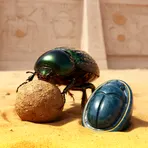
A large dung beetle that ancient Egyptians thought was sacred
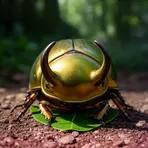
A large round beetle with a hard shiny shell and horns on its head
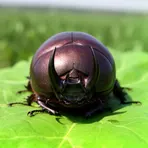
A large round beetle with a hard shell and horn-like spikes on its head

A thick beetle with a rounded body and often horns on its head
Surface Forms
Etymology
Scarab comes from an old Greek word skarabaios meaning 'beetle' and names the dung beetle that was sacred in ancient Egypt. Egyptians watched the beetle roll a ball like the sun and used scarab objects as signs of 'rebirth', which explains why scarabs were made as charms and art.