
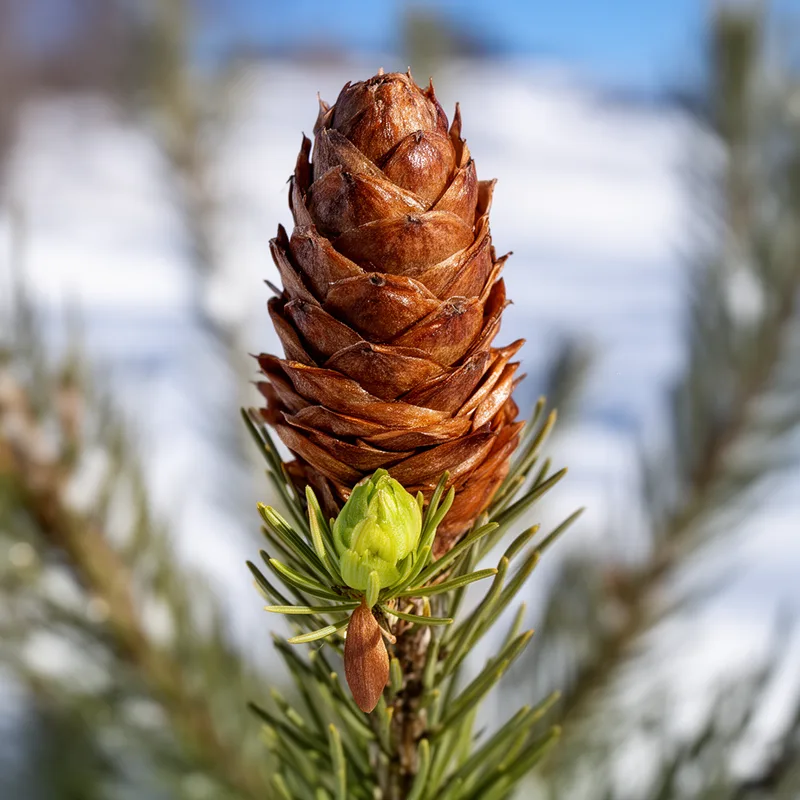
scale leaf
- noun
- /skeɪl liːf/
- Specialized
- The scale leaf covers the bud, protecting it from harsh winter weather.
Examples
-
The scale leaf protects the young bud.
-
As the bud opens in spring, the scale leaf falls away.
-
The scale leaves of the pine tree are tough and overlap closely.
-
What is a scale leaf?
-
The scale leaves of the plant provide protection for the delicate bud during winter.
-
In spring, new growth emerges from beneath the protective scale leaves.
-
The tree's scale leaves are essential for safeguarding the catkin until it unfurls.
Synonyms


 1
9.9
1
9.9
A leaflike part just below a group of flowers that often protects them

A small simple leaf that protects a new shoot or seedling

A small first leaf at the base of a side shoot or flower
How Leaflike

Surface Forms
Morphology
The meaning 'a specialized leaf or bract that protects a bud' is directly and compositionally derivable from 'scale' (a thin protective plate) + 'leaf' (a plant organ); the phrase transparently describes a leaf that functions like a protective scale. This kind of descriptive compound is common in botanical vocabulary and a B1 learner who knows both constituents would readily infer the protective, scale-like function.
Etymology
The noun scale leaf comes from a simple picture: a small leaf that acts like a scale, lying over a bud and overlapping like fish scales. Because it 'covers' and 'protects' the bud, the name now means a leaf that shields a young shoot or flower.