
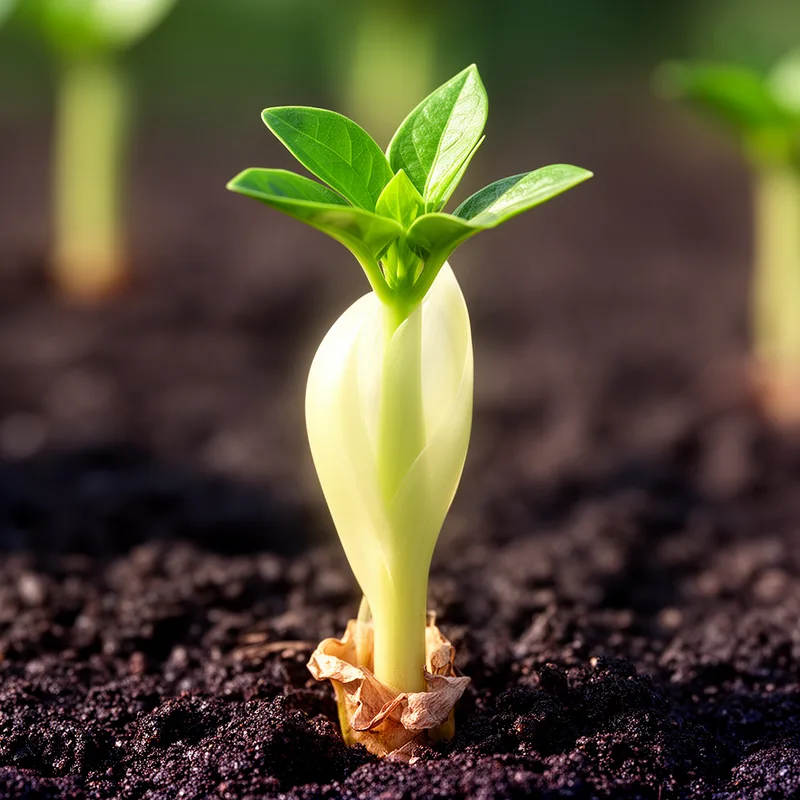
cataphyll
- noun
- /ˈkætəˌfɪl/
- Specialized
- The cataphyll is the first protective leaf that appears on many young seedlings.
Examples
-
Unlike true leaves, a cataphyll typically lacks chlorophyll and is not involved in photosynthesis.
-
The cataphylls at the base of the stem eventually dry up and fall away.
-
In many seedlings, the cataphyll serves as the plant's first protective leaf.
-
A cataphyll is important for young plants.
-
The cataphyll serves as a protective structure for young shoots.
-
In the early stages of growth, a cataphyll helps shield the developing plant.
-
Unlike mature leaves, a cataphyll is often smaller and does not contain chlorophyll.
How Leaflike


Surface Forms
Morphology
cataphyll = cata + phyll
Formed from Greek combining forms ('cata-' + 'phyll-') that are not productive standalone English words, so learners cannot reliably derive the meaning from familiar English bases.
Etymology
The word cataphyll comes from Greek parts cata- meaning 'down' and phyll meaning 'leaf', the same phyll you see in chlorophyll. So a cataphyll is a small, lower leaf that often acts as the first protective leaf or a simple scale at the base of a young plant.