
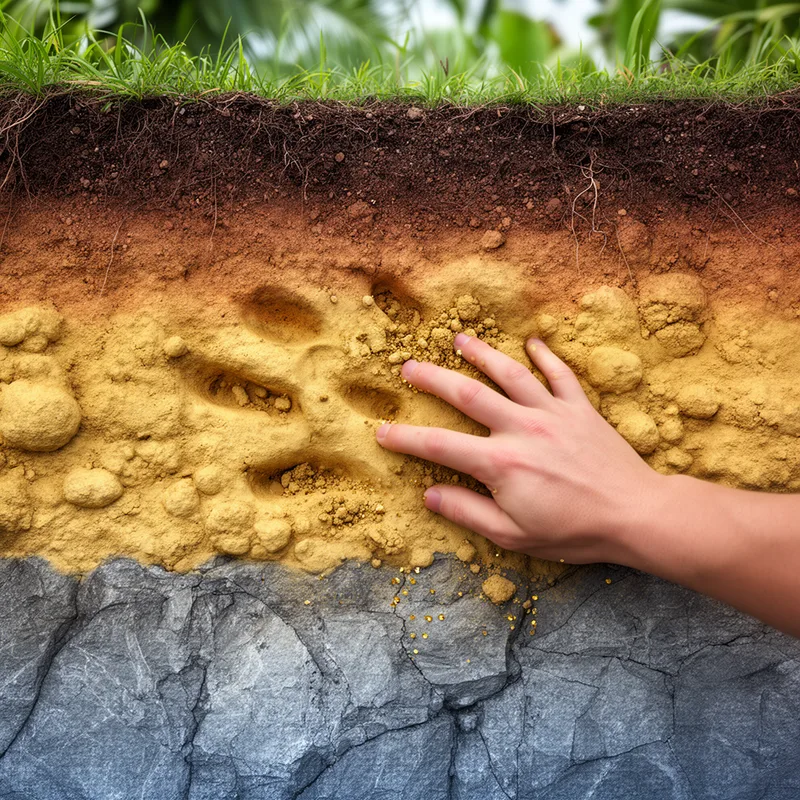
saprolite
- noun
- /ˈsæprəˌlaɪt/
- Specialized
- The geologist explained how saprolite forms from the weathering of bedrock over time.
Examples
-
In our excavation site, we discovered layers of saprolite that indicated intense chemical weathering.
-
First, there might be a deeper and less weathered zone below the kaolinized saprolite with a much higher hydraulic conductivity than the kaolinized (pallid) zone.
Academic text (1990) -
Saprolite is often used as a natural soil amendment due to its clay-rich composition.
Antonyms


Surface Forms
Morphology
saprolite = sapro + lite
The parts are technical combining forms (sapro- 'rotten' + -lite as a mineral/rock-forming element) rather than productive standalone English words, so learners cannot reliably infer the meaning from familiar vocabulary.
Etymology
Saprolite comes from the Greek parts sapro- meaning 'rotten' and lithos meaning 'stone'. So saprolite is literally 'rotten stone', which helps you remember it: it is soft, clay-rich rock that has broken down in place.