

sandalwood tree
- noun
- /ˈsændəlˌwʊd tri/
- The sandalwood tree is known for its aromatic heartwood.
Examples
-
The sandalwood tree is highly valued for the aromatic oil extracted from its heartwood.
-
Chests made from sandalwood trees are prized for their pleasant scent and ability to repel insects.
-
In Indonesia, the sandalwood tree is protected due to overharvesting for its valuable wood.
-
Many artisans prefer using sandalwood trees for their woodworking projects.
-
The carpenter used the fragrant heartwood of the sandalwood tree to craft beautiful furniture.
-
Many cultures have used the oils extracted from the sandalwood tree in their traditional perfumes.
-
To ward off insects, she placed small pieces of the sandalwood tree around the picnic area.
Synonyms
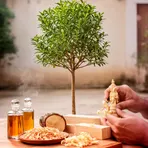
A small tree with very fragrant wood used for perfume and carving

A tree that grows on other plants in Indonesia and Malaysia with yellow, fragrant wood that repels insects
Surface Forms
Morphology
The phrase is a straightforward noun-noun composition: 'sandalwood' (the fragrant wood) + 'tree' indicates a tree that yields sandalwood. This is a regular, compositional pattern found across languages, so a B1 learner who knows both constituents should be able to infer the meaning.
Etymology
Sandalwood tree comes from the sweet, long-lasting smell of its wood, and the sandal part points to that scent rather than the shoe. People used this scented wood for perfumes and carved boxes that kept insects away, so the name now means a tree valued for its fragrant inner wood.

