

sand sage
- noun
- US
- Ranchers often struggle to control the spread of sand sage on their grazing lands.
Examples
-
The delicate silver leaves of sand sage shimmered in the early morning light.
-
Large areas of the prairie were covered in sand sage and other native grasses.
-
The sand sage grows abundantly in the desert.
-
Many ranchers consider sand sage a nuisance.
-
Ranchers often struggle to control the spread of sand sage on their grazing lands.
-
Large areas of the prairie were covered in sand sage and other native grasses.
-
Many ranchers consider sand sage a nuisance due to its invasive growth.
Synonyms

A bush with silver leaves that grows in dry areas and is often a weed
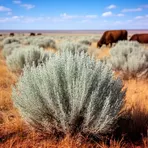
A silver-grey shrub that grows on plains in the United States and Mexico and often becomes a weed in pastures
Surface Forms
Morphology
This is a straightforward noun–noun compound where 'sand' modifies 'sage' to indicate a kind of sage associated with sandy habitats; a B1 learner who knows 'sand' and 'sage' can infer it refers to a plant/shrub that grows in sand. The compositional pattern is a regular, cross-linguistically common compounding in English, so the overall meaning is immediately derivable from the parts.
Etymology
Sand sage comes from a simple picture: the plant grows in sand and its leaves look like common sage. People called the silver-haired 'shrub' sand sage, so today the name means that familiar wild 'weed' found on grazing land.

