
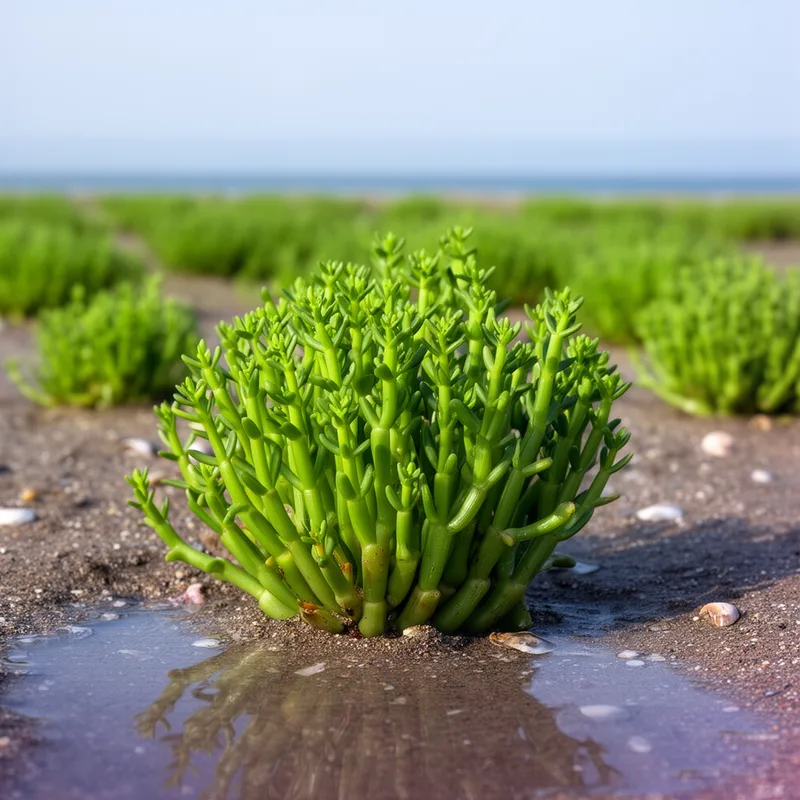
samphire
- noun
- /ˈsæmfaɪər/
- UK
- Wild samphire grows along the salt marshes near the coast.
Examples
-
She picked fresh samphire to add a briny crunch to the seafood dish.
-
Historically, samphire was collected and burned for its use in making glass.
-
I love to eat samphire with my seafood.
-
The chef garnished the dish with fresh samphire.
-
The chef picked fresh samphire from the salt marsh to use in his seafood salad.
-
In culinary dishes, samphire adds a unique briny flavor that pairs well with fish.
-
Many coastal foragers enjoy harvesting samphire for its crunchy texture and salty taste.
Synonyms


 1
9.9
1
9.9
A thick plant that stores water and grows in salty marshes by the sea
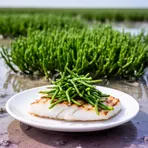
A marsh plant with thick stems that tastes salty and people use as a garnish

A plant that grows in wet areas near the sea with thick stems used to make ashes for glass
Surface Forms
Etymology
Samphire comes from an old French name that meant Saint Peter, because people called the plant 'Saint Peter's herb' for growing by the sea and for use by fishermen. Think of it as 'sea asparagus', a salty, crunchy coastal plant, which explains its name and why it was collected for glass-making.