

salt tree
- noun
- We admired the silvery foliage and delicate blooms of the salt tree during our trip to Siberia.
Examples
-
The salt tree thrives in salty soils where few other plants can survive.
-
Botanists study the salt tree for its ability to withstand harsh, saline environments.
-
The salt tree thrives in harsh environments.
-
Many salt trees grow along the Caspian coast.
-
The salt tree thrives in salty soils where few other plants can survive.
-
We admired the silvery foliage and delicate blooms of the salt tree during our trip to Siberia.
-
Botanists study the salt tree for its ability to withstand harsh, saline environments.
Synonyms
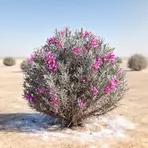
A spiny shrub from the Caspian salt plains and Siberia with silvery leaves and pink-purple flowers
Surface Forms
Morphology
The compound 'salt tree' is a straightforward noun-noun combination where 'salt' modifies 'tree', so a B1 learner who knows both words would reasonably infer it denotes a plant associated with salt or saline habitats. This compositional pattern is common cross-linguistically (cf. 'saltbush', 'salt cedar'), making the meaning predictable despite the scientific specificity in the full definition.
Etymology
Salt tree comes from a simple picture: it is a tree-like plant that grows in very salty ground, so salt describes the place where it lives. So salt tree means 'a plant that can live in salty soil'.

