

salt plain


 1
3.9
1
3.9
- noun
- /sɔlt pleɪn/
- After the lake dried up, a stunning salt plain emerged, reflecting the blue sky.
Examples
-
The expedition team camped on the salt plain, surrounded by the shimmering white landscape.
-
Once we clear the escarpment and the great salt plains, we'll take the bikes over the dunes all the way.
-
The Sea of Afar, which covered that region of Africa, became land-locked on the eastern side and began to evaporate; all that remains now is a vast salt plain.
Academic text (1995) -
Cornelius Balbus' famed desert crossing is now often replicated by adventure tourists, who cross the salt plain and dune fields by Land Rover.
Academic text (2002) -
The hikers found themselves lost in the vast salt plain under the scorching sun.
Synonyms
 98
1.0
98
1.0
A large flat area of land with few trees
 3
4.8
3
4.8
A flat area of land covered with salt after water dries
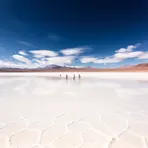
A large flat area of ground covered in salt, often in deserts

A natural low area like a salt lake where water dries and leaves salt

A flat, dry area where water evaporates and leaves a white salt crust
Surface Forms
Morphology
The meaning 'a large, flat area covered with salt' is directly and compositionally built from 'salt' (the substance) modifying 'plain' (a flat area), so the overall sense is predictable from the constituents. This noun–noun compounding pattern is regular and cross-linguistically common (e.g., 'salt flat', 'salar'), so a B1 learner who knows both words would readily infer the MWE's meaning.
Etymology
Salt plain comes from a simple picture: a wide, flat plain where salty water dried and left a white layer of salt on the ground, so the land looks bright and empty. That's why it means 'a large, flat area of land covered with salt'.